

Most people think investing is about picking the next big stock or timing the market. But the truth? The people who build real wealth don’t chase hot tips. They make wise investment choices-consistently, calmly, and without emotion. If you’ve ever lost sleep over a drop in your portfolio, or felt pressured to jump into crypto because everyone else was, you’re not alone. The good news is, you don’t need to be a financial expert to invest wisely. You just need a clear plan and the discipline to stick with it.
Start with Why You’re Investing
Before you buy a single stock or fund, ask yourself: What am I saving for? This isn’t just a philosophical question. It’s the foundation of every smart decision. Investing for retirement is different from saving for a house down payment in five years. And both are totally different from trying to fund your kid’s college tuition in ten years.Each goal has a timeline. And that timeline decides what kind of investments make sense. If you need the money in less than three years, you shouldn’t be in the stock market. Too risky. You’ll want savings accounts, CDs, or short-term bonds. If you’re investing for retirement 25 years from now? You can afford to ride out market swings. That’s when stocks and index funds become your best friends.
Write down your goals. Not just “save money.” Be specific: “Save $75,000 for a home down payment by 2028.” “Build a $1.2 million retirement fund by age 65.” Having numbers makes it real. It turns abstract wishes into actionable plans.
Understand Risk-Not the Way Wall Street Tells You To
Everyone talks about risk. But most people get it backward. They think risk is losing money in a bad month. That’s not risk. That’s noise.Real risk is outliving your money. It’s being forced to sell your investments at a loss because you needed cash for an emergency. It’s not having enough to retire because you kept everything in cash and inflation ate your savings.
Here’s what actually works: Diversify. Not just across stocks and bonds, but across types of assets. A portfolio that’s 60% U.S. stocks, 20% international stocks, and 20% bonds has historically delivered solid returns with less volatility than putting everything in tech stocks. You don’t need to pick winners. You just need to own the whole game.
The Vanguard Total Stock Market Index Fund (VTI) and the Vanguard Total Bond Market Index Fund (BND) are two of the most common choices. They track the entire market. You’re not betting on Apple or Tesla-you’re betting on the U.S. economy as a whole. And over time, that’s paid off.
Keep Costs Low-It’s the Silent Killer of Returns
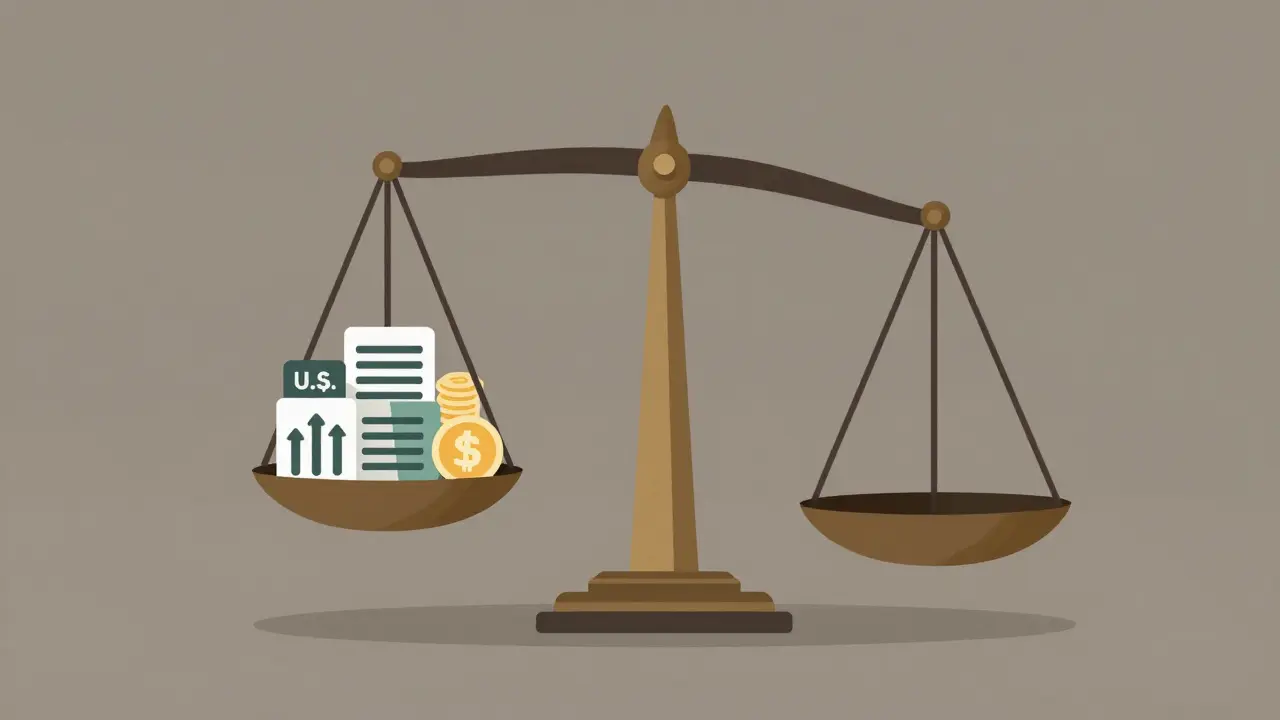
You don’t need to be a genius to beat the market. You just need to avoid paying too much.Here’s a simple fact: A 1% fee on your investments cuts your returns by nearly 25% over 30 years. That’s not a small detail. That’s the difference between retiring comfortably and running out of money.
Active mutual funds? They often charge 1% or more in annual fees. And most of them don’t beat the market. Ever. According to the SPIVA U.S. Scorecard, over 90% of actively managed U.S. equity funds underperformed their benchmarks over the 15-year period ending in 2024.
Index funds and ETFs? They often cost 0.03% to 0.10% a year. That’s a hundred times cheaper. And they deliver the market’s return-no guesswork needed. Fidelity, Schwab, and Vanguard all offer low-cost index funds with no minimums. You can start with $1.
Watch out for hidden fees too. Some brokers charge account maintenance fees, inactivity fees, or commissions on trades. If you’re using a platform that charges for every buy or sell, you’re bleeding money. Switch to a zero-commission broker like Fidelity, Charles Schwab, or Robinhood (for basic trading).
Invest Regularly-Even If It’s Just a Month
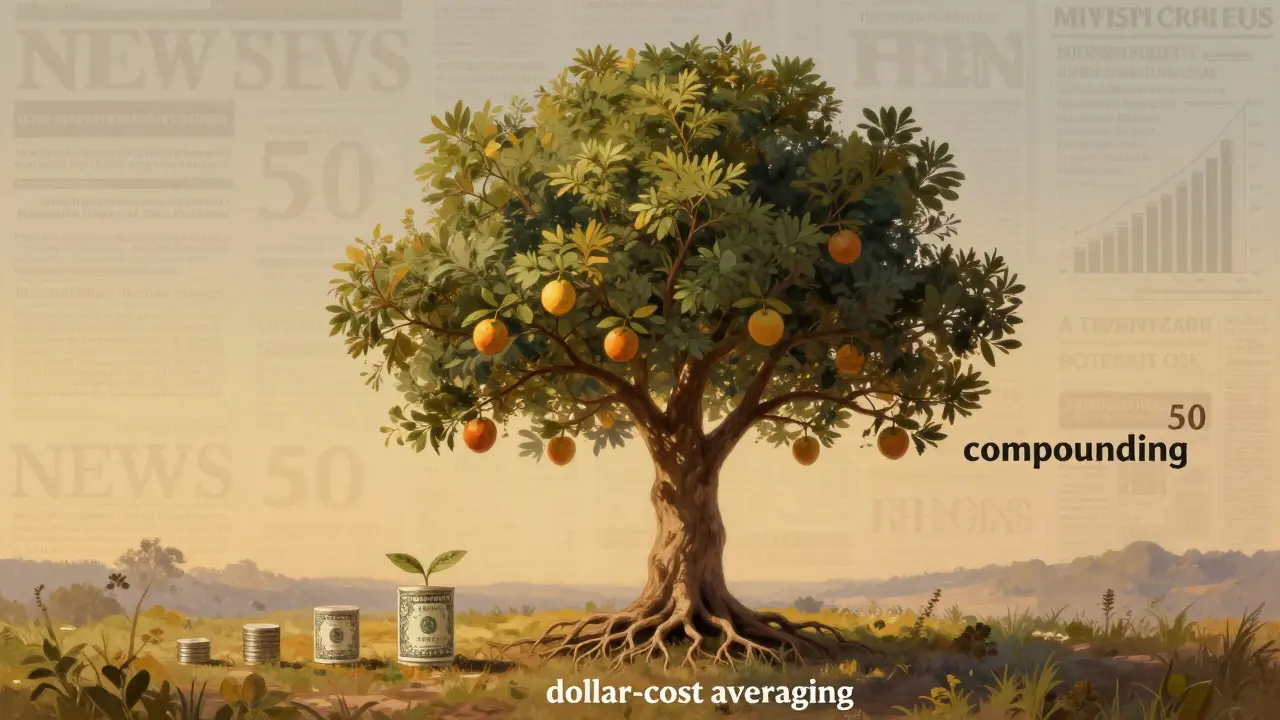
The biggest mistake people make? Waiting until they have “enough” to invest. There’s no such thing as enough. You start with what you have.Automate it. Set up a direct deposit from your paycheck into an investment account. Even $25 a week adds up. $100 a month is $1,200 a year. Invest that for 30 years at a 7% average return? You’ll have over $115,000. No lottery win. No side hustle. Just consistency.
This is called dollar-cost averaging. It means you buy more shares when prices are low and fewer when they’re high. You don’t try to time the market. You just show up. And over time, that smooths out the bumps.
Most 401(k) plans let you do this automatically. If your employer offers a match, contribute at least enough to get the full match. That’s free money. It’s like getting a 50% or 100% return on your investment right away.
Ignore the Noise-And the News
The media doesn’t care if you make money. They care about clicks. That’s why you see headlines like “Markets Crash!” or “Crypto Soars!” every single day. Most of it is meaningless.Here’s what actually happened in 2022: The S&P 500 dropped over 19%. Scary, right? But if you held on, it bounced back in 2023 and hit new highs in 2024. If you sold in panic, you locked in the loss. If you stayed in, you made it back-and more.
Check your portfolio once a quarter. Not daily. Not weekly. Once every three months. That’s enough to stay on track without getting sucked into the emotional rollercoaster.
And don’t listen to influencers on TikTok or YouTube telling you to buy Dogecoin or NFTs. They’re not managing your retirement. They’re selling you a fantasy. Real wealth is built slowly, quietly, and without drama.
Rebalance Once a Year-No More, No Less
Your portfolio drifts over time. If stocks do well, they grow bigger in your portfolio. Bonds lag behind. Soon, you’re more exposed to stocks than you planned.That’s fine. But once a year, check your allocations. If your target was 60% stocks and 40% bonds, and now it’s 70% stocks and 30% bonds, sell a little of the stocks and buy more bonds. Bring it back to your plan.
This isn’t market timing. It’s discipline. You’re selling high and buying low-without trying to predict the future. It’s the opposite of what most people do.
Most platforms let you set up automatic rebalancing. Turn it on. Then forget about it.
Know When to Get Help
You don’t need a financial advisor to invest wisely. But you might need one to stay on track.If you’re overwhelmed, confused, or emotionally tied to your investments, a fee-only fiduciary advisor can help. These are professionals who are legally required to act in your best interest. They charge by the hour or a flat fee-not a percentage of your assets.
Look for a CFP (Certified Financial Planner). Avoid anyone who pushes specific products or earns commissions. If they’re selling you insurance or annuities as part of your “plan,” walk away.
For most people, a simple portfolio of low-cost index funds, automated contributions, and annual check-ins is all you need. The rest is noise.
What Wise Investors Don’t Do
- They don’t try to time the market.
- They don’t chase hot stocks based on Reddit threads.
- They don’t panic-sell during downturns.
- They don’t pay high fees for active management.
- They don’t invest money they might need in the next five years.
What they do? They keep it simple. They stay consistent. They think in decades, not days.
Final Thought: Wealth Is a Habit, Not a Win
There’s no secret formula. No magic app. No insider tip that will make you rich overnight. The path to building wealth is boring. It’s automatic deposits. It’s low-cost funds. It’s ignoring the headlines. It’s showing up year after year, even when the market feels like it’s falling apart.Start today. Even if it’s just $20. Set up the automation. Pick one index fund. Let time and discipline do the rest. That’s how wise investment choices are made.
What’s the safest way to start investing with little money?
Start with a low-cost index fund through a platform like Vanguard, Fidelity, or Schwab. You can invest as little as $1. Use automatic investing to put in $25 or $50 a month. Stick to broad-market funds like VTI or VOO. Avoid individual stocks until you have more experience. The goal isn’t to get rich fast-it’s to build steadily.
Should I invest in crypto or real estate instead of stocks?
Crypto and real estate can be part of a portfolio, but they’re not replacements for core investments. Crypto is extremely volatile and lacks the long-term track record of stocks. Real estate requires more capital, maintenance, and time. For most people, a simple portfolio of low-cost index funds is the best foundation. Add alternative assets only after you’ve mastered the basics and have extra money to risk.
How much should I have in cash versus investments?
Keep 3 to 6 months of living expenses in a high-yield savings account. This is your emergency fund-separate from your investments. Don’t touch your investments for emergencies. That’s how people lock in losses. Once your emergency fund is covered, put everything else into investments that match your timeline.
Is it too late to start investing if I’m over 40?
No. It’s never too late. Even starting at 45 with $500 a month and a 7% average return can get you over $300,000 by 65. The key is to be aggressive with contributions and keep fees low. You won’t have the luxury of 40 years of compounding, but you can still build a solid retirement fund in 20 years.
What’s the difference between a 401(k) and an IRA?
A 401(k) is offered through your employer and often comes with a company match-that’s free money. An IRA is opened on your own and has lower contribution limits but more investment choices. If your employer offers a match, max that out first. Then contribute to an IRA. You can have both. Use a Roth IRA if you expect to be in a higher tax bracket in retirement.

Henry Kelley
December 24, 2025 AT 16:35Man, I wish I’d read this five years ago. I used to check my portfolio every morning like it was a sports score. Now I just set it and forget it. $50 a month into VTI and I’m sleeping like a baby. No more panic selling when the market dips. Honestly? The biggest win was stopping myself from listening to Reddit gurus.
Victoria Kingsbury
December 25, 2025 AT 07:23Finally, someone who gets it. The real risk isn’t volatility-it’s inflation eating your cash under the mattress. I’ve been using VTI + BND since 2020. Fees are microscopic, returns are steady, and I don’t need to be a quant to understand it. Also, dollar-cost averaging is the unsung hero of personal finance. You don’t need to be lucky-you just need to be consistent.
Tonya Trottman
December 26, 2025 AT 08:03Oh wow. Another ‘just buy index funds’ sermon. Let me guess-you also think Bitcoin is a pyramid scheme and Warren Buffett is a deity? Newsflash: markets aren’t always efficient, and passive investing doesn’t work in hyperinflationary environments. Also, ‘low-cost index funds’? You mean the same ones that underperformed in 2022? And you call that wisdom? I’ve got a 70% crypto, 30% gold portfolio and I’m laughing all the way to the bank while you’re still waiting for your ‘compounding magic.’
Rocky Wyatt
December 27, 2025 AT 02:45I lost $12k in 2022 because I listened to this exact advice. I thought ‘just hold’ meant ‘don’t move a single dollar.’ Turns out, holding is just another word for watching your life savings evaporate while your cousin buys a Lambo with Dogecoin. I’m not saying go all in on crypto-but don’t pretend the market isn’t rigged. You think Vanguard gives a damn about you? They make money off your silence.
Santhosh Santhosh
December 28, 2025 AT 03:35I come from a small town in India where most people don’t even have bank accounts, let alone investment portfolios. But I started with ₹1,500 a month in an index fund through Zerodha. It’s been three years. I didn’t know what ETF meant. I just knew I didn’t want to be poor like my father. Now I have ₹6 lakhs. It’s not much to some, but to me? It’s hope. This article reminded me that small steps, repeated, change everything. Thank you.
Ray Htoo
December 28, 2025 AT 12:10Man, this is the kind of post that makes you wanna hug the internet. I used to think investing was like gambling with a spreadsheet. Now I get it-it’s like planting a tree. You don’t stare at it every day waiting for fruit. You water it, you protect it, you trust the soil. And then one day, you’re sitting in the shade you didn’t even realize you were growing. VTI’s my new best friend. No drama. Just growth.
Natasha Madison
December 28, 2025 AT 14:44Who funded this article? The Fed? The banks? They want you to believe in ‘index funds’ so you don’t question the system. Real wealth is in land, gold, and cash under the mattress. The stock market is a casino rigged by Wall Street and the IRS. Don’t fall for the propaganda. Your 401(k) is a trap. Start hoarding silver. Now.
Sheila Alston
December 28, 2025 AT 22:44It’s disgusting how people treat money like it’s a game. You don’t just ‘set it and forget it’-you need discipline, moral character, and a strong work ethic. I’ve seen so many people get lazy and blame the market. The truth? They’re just weak. If you can’t save $50 a month, you don’t deserve to be rich. And if you think ETFs are the answer, you’re not thinking deeply enough. Real wealth comes from sacrifice. Not algorithms.
sampa Karjee
December 29, 2025 AT 23:37How quaint. You speak of ‘low-cost index funds’ as if they’re the pinnacle of financial wisdom. In the West, yes. But in the Global South, where currency devaluation is a daily reality, your VTI is a paper tiger. I’ve studied the history of asset allocation across 17 emerging economies. What works in Boston fails in Bangalore. Your ‘one-size-fits-all’ advice is colonial nonsense dressed in finance jargon.
Patrick Sieber
December 30, 2025 AT 03:16Just wanted to say thanks for this. I’m in Ireland and honestly, the advice here is the same as in the US. Low fees, long term, no drama. I started with €20 a week into a Vanguard ETF. Now I’ve got over €15k. It’s not glamorous, but it’s mine. No hype. No influencers. Just time and patience. This is how normal people get ahead.
Reshma Jose
December 31, 2025 AT 04:21Y’all are overthinking this. I started with $10 a week. Used Robinhood. Bought VOO. Forgot about it. Three years later? I bought my first car with the gains. No fancy charts. No spreadsheets. Just set it and left it. If you’re stressing about it, you’re doing it wrong. Money’s supposed to work for you, not the other way around.
rahul shrimali
January 1, 2026 AT 17:26Start now even if its small just keep going dont wait for perfect time the market never waits for you
Eka Prabha
January 1, 2026 AT 19:01While the article purports to advocate for rational investing, it conspicuously omits systemic financial risk factors such as quantitative easing, debt monetization, and the structural fragility of fiat currencies. The normalization of passive investing as a panacea reflects a dangerous complacency toward macroeconomic instability. One must ask: who benefits from the myth of market efficiency? The answer lies not in VTI, but in the institutional architecture that commodifies savings. This is not investing-it’s financial pacification.