
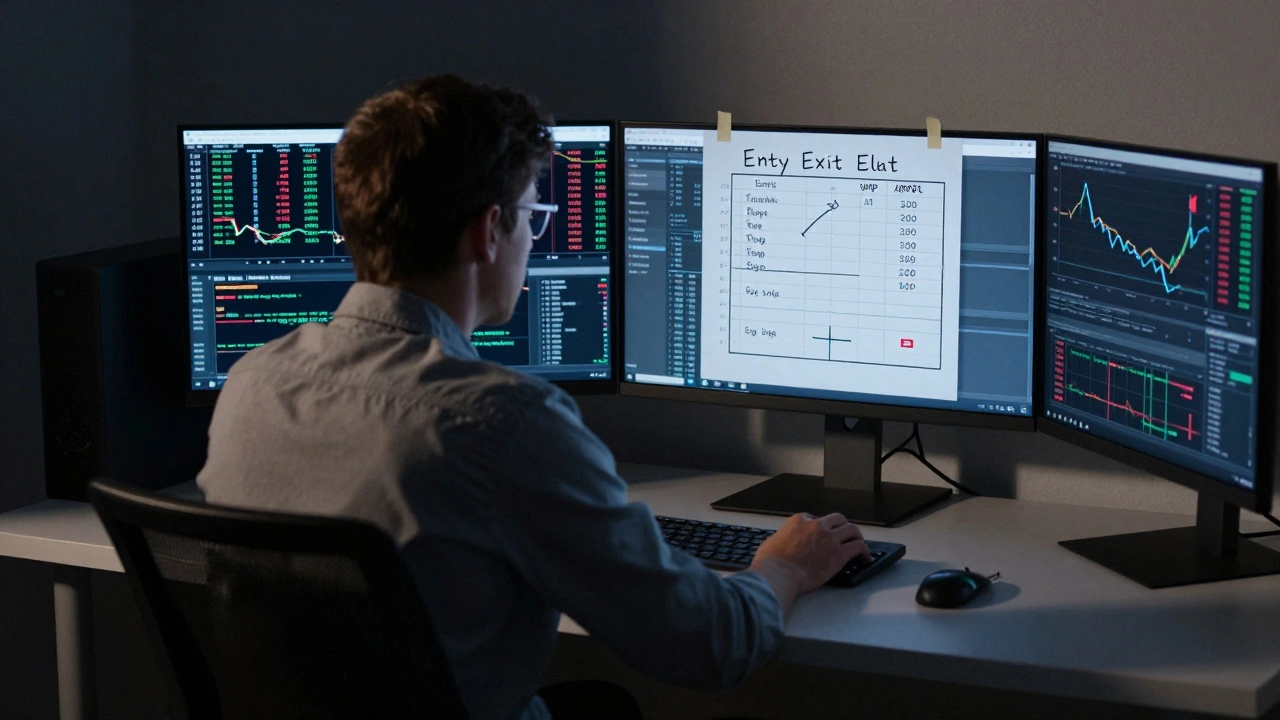
Most people think becoming a stock trading guru means memorizing candlestick patterns, chasing hot tips, or watching CNBC all day. The truth? The real secrets aren’t in the charts-they’re in your head. If you’ve lost money on trades you swore were winners, or you’ve watched a stock jump 20% right after you sold it, you’re not bad at trading. You’re just missing the hidden rules most gurus never talk about.
Trading Isn’t About Predicting the Market-It’s About Managing Your Reactions
The market doesn’t care if you’re right. It doesn’t reward your research, your gut feeling, or your years of experience. It only responds to price action and volume. What it does punish? Emotion. Fear and greed aren’t just buzzwords-they’re the two biggest killers of trading accounts. A 2023 study from the University of Chicago tracked over 12,000 retail traders and found that those who held trades longer than three days without a plan lost 68% more than those who stuck to written rules.
Here’s the brutal fix: write down your trade plan before you hit buy. Not after. Not when you’re excited. Before. Include: entry price, exit price, stop-loss, and maximum loss you’re willing to take. Stick to it like a court order. No exceptions. The best traders don’t have better instincts-they have better discipline.
Stop Chasing ‘The Setup’-Focus on High-Probability Scenarios
You’ve seen the videos: ‘This pattern wins 90% of the time!’ Spoiler: it doesn’t. Most ‘high-probability’ setups only work under very specific conditions. Volume spikes, institutional buying, and clear support/resistance zones? Those matter. A random double bottom on a low-float penny stock? That’s gambling.
Real gurus look for three things together:
- Price breaking a key level with above-average volume (not just any spike)
- Confirmation from a second indicator (like RSI divergence or MACD crossover)
- Alignment with the daily trend (no counter-trend trades unless you’re a scalper)
For example, if Apple breaks above $215 on heavy volume after holding support for three days, and the RSI is coming out of oversold, that’s a setup. If a random biotech stock jumps 15% on no news and 10,000 shares traded? That’s noise. Learn to ignore the noise.
Your Risk Management Is Broken-Here’s How to Fix It
Most traders risk 5%, 10%, even 20% of their account on a single trade. That’s not confidence-that’s suicide. One bad week wipes you out. The pros? They risk 1% or less. Why? Because they know losses are inevitable. The goal isn’t to avoid them. It’s to survive them.
Here’s how to calculate your position size:
- Decide your max loss per trade (1% of account)
- Subtract your stop-loss price from your entry price
- Divide your max loss by the dollar amount between entry and stop
Example: You have a $50,000 account. You’re buying Tesla at $240, stop at $230. That’s a $10 risk per share. Your max loss per trade: $500 (1% of $50,000). So you buy 50 shares ($500 / $10 = 50). Done. No guesswork. No emotion.
That’s the difference between surviving and thriving.
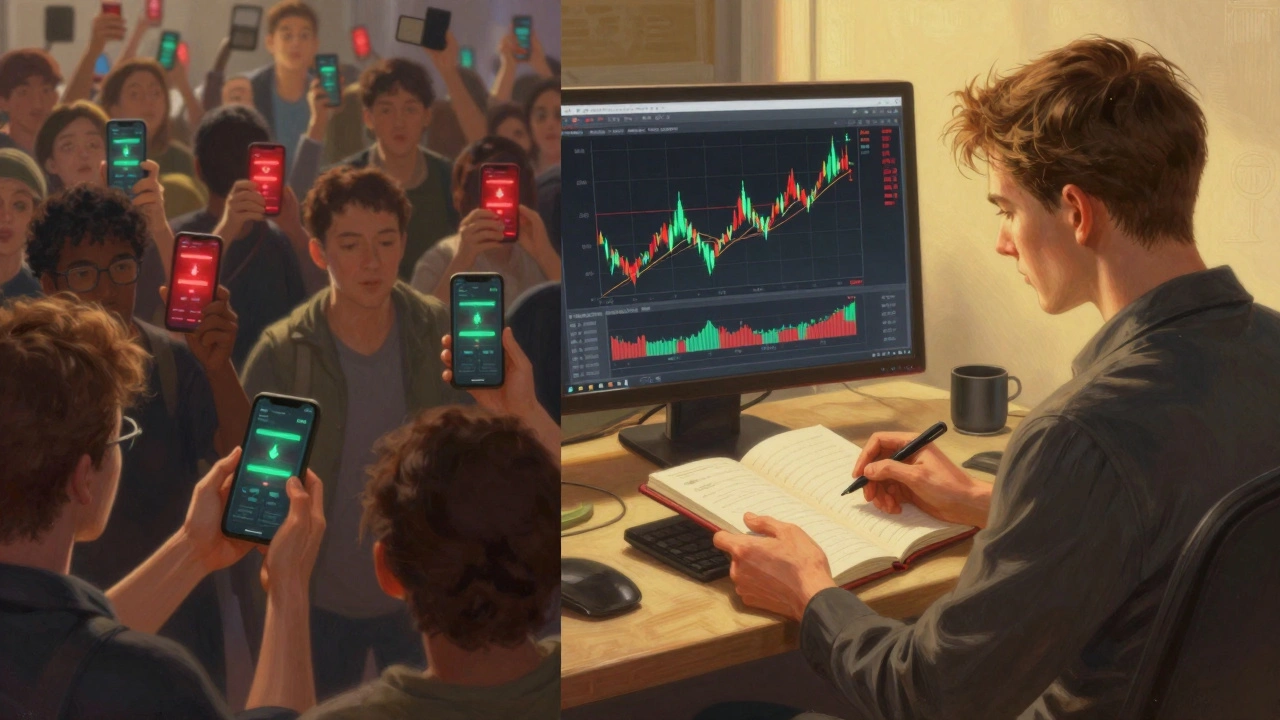
Trade Less-Win More
The myth: the more trades you make, the more you earn. The reality: top traders make 1-3 high-quality trades a month. The rest of the time? They watch, wait, and reset. Why? Because every trade costs money-commission, slippage, emotional fatigue. And the market doesn’t reward activity. It rewards patience.
Think of it like fishing. You don’t cast 100 times an hour hoping for a bite. You find the spot, wait, and strike when the fish is there. Stock trading works the same. If you’re trading daily because you’re bored, you’re not a trader-you’re a gambler.
Set a rule: only trade if you have one clear setup per week. If you don’t see it? Sit out. That’s not missing out. That’s protecting your capital.
Keep a Trading Journal That Actually Works
Most journals are useless. ‘Bought AAPL, it went up, I was right.’ That’s not a journal. That’s a diary.
A real trading journal answers three questions after every trade:
- Why did I take this trade? (Refer to your written plan)
- Did I follow my rules? (Yes or no)
- What did I learn? (Not ‘I got lucky’-something specific)
Review it weekly. Look for patterns. Do you always exit too early after a 3% gain? Do you re-enter after a stop-loss hits? Do you trade more after a loss? The answers will shock you-and they’ll change your results.
One trader I know kept a journal for 18 months. He discovered he lost 80% of his money on trades taken after 3 p.m. EST. He stopped trading after 2:30 p.m. His win rate jumped from 42% to 67%.

Ignore the Gurus-Learn From the Data
YouTube ‘gurus’ selling $5,000 courses? They’re not making money trading. They’re making money selling the dream. Real traders don’t post their P&L. They don’t shout ‘BUY NOW!’ They’re quietly adjusting spreadsheets and reviewing their journals.
Instead of following influencers, study public data:
- SEC Form 13F filings-see what big funds are buying
- CBOE put/call ratios-when they spike, retail is panicking or euphoric
- Finviz stock screener-filter for stocks with high volume and institutional ownership
These don’t give you magic signals. They give you context. And context beats hype every time.
The Real Secret: It’s Not About the Market-It’s About You
There’s no secret indicator. No hidden app. No secret channel. The only thing separating the gurus from the rest is this: they’ve spent years fixing themselves, not the market.
They sleep. They take breaks. They don’t check their accounts at 3 a.m. They don’t blame the market when they lose. They take responsibility. They adapt. They keep learning.
Becoming a stock trading guru isn’t about mastering Fibonacci retracements or spotting head-and-shoulders patterns. It’s about becoming the kind of person who can sit still when everyone else is panicking, who can walk away from a trade that looks good but doesn’t meet their rules, and who can lose money without losing themselves.
That’s the only edge that lasts.
Can I become a stock trading guru without a big account?
Yes. Account size doesn’t determine success-discipline does. Many top traders started with under $5,000. The key is risk management. Trading small forces you to focus on percentage gains, not dollar amounts. That’s how you build the right mindset. Start with what you have, stick to your rules, and scale up only after you’ve proven you can consistently make money over 20+ trades.
How long does it take to become a profitable trader?
Most traders take 12 to 24 months of consistent practice to become profitable. The ones who make it faster usually have a structured plan, keep a detailed journal, and avoid overtrading. The ones who never make it? They jump from strategy to strategy, chasing quick wins. There’s no shortcut. It’s a skill built through repetition, reflection, and patience.
Do I need to use leverage to make serious money?
No. Leverage amplifies both gains and losses. Most retail traders who use leverage blow up their accounts within months. The most successful traders avoid it entirely-or use it sparingly (2:1 max) only after years of consistent profitability. You don’t need to risk everything to win. In fact, the safest traders make the most over time.
What’s the best time of day to trade?
The first hour after the market opens (9:30-10:30 a.m. ET) and the last hour before close (3-4 p.m. ET) have the most volume and volatility. That’s when the best setups happen. Midday (11 a.m.-2 p.m.) is usually flat and noisy-avoid trading then unless you’re a scalper. For swing traders, timing matters less than the setup itself.
Should I trade options or stick to stocks?
Start with stocks. Options are complex, time-sensitive, and have a higher risk of total loss. Most beginners lose money on options because they don’t understand volatility decay or expiration risk. Once you’re consistently profitable trading stocks for six months, then consider learning options as a tool-not a shortcut.
If you’ve read this far, you’re already ahead of 95% of traders. Now go do the work. Not tomorrow. Today.

chioma okwara
December 6, 2025 AT 03:33uuhh so u just said trading is abt not being emotional but then u wrote like 5000 words lmao i need a nap just to read this
Samar Omar
December 6, 2025 AT 09:05Oh darling, how quaint. You think discipline is the secret? How adorable. The real secret is that 99% of retail traders are emotionally stunted toddlers with access to Robinhood and a credit card. They don’t need a journal-they need therapy. I’ve watched people cry over a 3% loss like it was the end of the world. Meanwhile, I’ve been quietly compounding at 18% annually since 2019, not because I’m smart, but because I refuse to be part of the circus. The market doesn’t care about your trauma. It only cares if you’ve unlearned the need to be seen. You’re not trading stocks. You’re performing for an audience of one: your ego.
John Fox
December 8, 2025 AT 03:501% risk rule works. been doing it since 2020. no drama. no stress. just checks and balances
Tasha Hernandez
December 9, 2025 AT 11:27Oh honey. You wrote all this and didn’t mention the SEC’s quiet manipulation of short-selling rules? Or how institutional algos bait retail traders into stop hunts before the 3 p.m. rally? You think your journal is the answer? Sweetie, your journal is just a diary for people who still believe in fairness. The market is a casino rigged by hedge funds with Bloomberg terminals and federal connections. You’re not a trader. You’re a data point. And your ‘discipline’? It’s just the sound of your soul getting quietly erased.
Anuj Kumar
December 10, 2025 AT 09:04they all lying. wall street owns everything. even your journal. they see it. they use it. dont trust any of this
Christina Morgan
December 11, 2025 AT 02:43John Fox said it best-1% risk is the quiet hero of trading. But I want to add: if you’re reading this and thinking ‘I’ll start tomorrow,’ please just start today. Even if it’s with $100. Even if you only make one trade this week. Progress isn’t loud. It’s consistent. And you don’t need a fancy setup-you just need to show up. I’ve seen people go from scared beginners to calm, confident traders just by sticking to the basics. You’ve got this.
Kathy Yip
December 12, 2025 AT 00:26i keep thinking about how the market doesn’t care if you’re right… but what if being ‘right’ isn’t the point? what if the point is learning to sit with uncertainty? i’ve been trying to trade for two years and i still panic when a stock dips… maybe the real goal isn’t to win trades but to become someone who doesn’t need to win them to feel okay
Bridget Kutsche
December 12, 2025 AT 19:10Just wanted to say thank you for this. I started trading last year with $2k and lost half of it because I was chasing ‘hot tips.’ Then I read your post, wrote down my rules, and stuck to them-even when I wanted to bail. My win rate went from 38% to 61% in 3 months. I’m not rich. But I’m not broke anymore. And I sleep at night. Keep doing what you’re doing. People like you make the internet worth using.
Jack Gifford
December 13, 2025 AT 15:14Love the journal advice. I used to write ‘bought AAPL, it went up, yay.’ Now I write: ‘Entered at $185 because RSI crossed above 30 + volume 20% above 50-day avg. Stopped at $183 because price hit resistance. Emotionally, I felt anxious after 10 mins. Lesson: don’t trade when tired.’ That’s the difference between guessing and growing.