

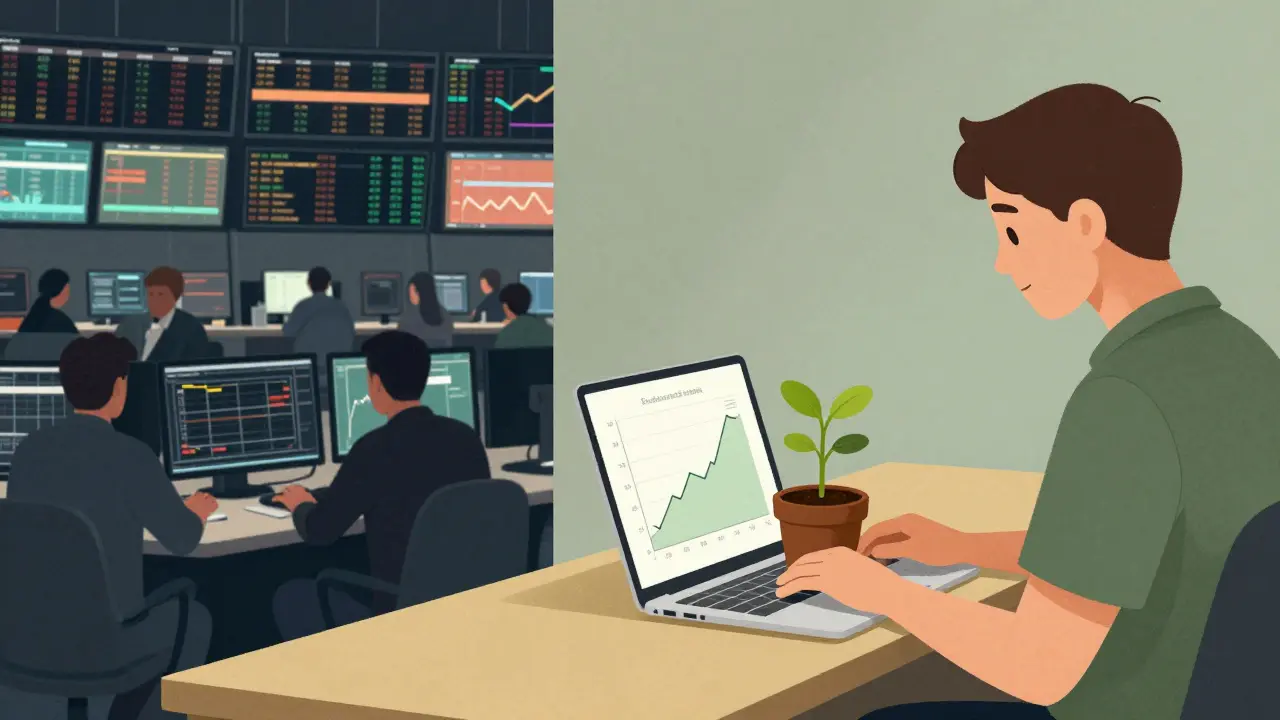
Buying your first stock feels like stepping onto a busy street without knowing which way the cars are moving. You’ve heard people talk about making money in the market, but you’re not sure where to start-or if you even should. The good news? You don’t need a finance degree or a wall of monitors to get started. Stock trading basics are simple enough for anyone to learn, but dangerous if you skip the fundamentals.
What Exactly Is Stock Trading?
When you trade stocks, you’re buying small pieces of a company-called shares. If you buy one share of Apple, you own a tiny part of Apple. Not enough to make decisions, but enough to benefit if the company grows. Stock prices move based on what people believe the company will do next: Will it release a popular product? Will profits rise? Will a scandal hurt its reputation?
Trading isn’t the same as investing. Trading usually means buying and selling quickly-sometimes within minutes or hours-to profit from short-term price swings. Investing means holding stocks for months or years, betting that the company will get stronger over time. Most beginners should start with investing. It’s less stressful, less risky, and works better for regular people with full-time jobs.
How Do You Actually Buy a Stock?
You need a brokerage account. Think of it like a bank account, but instead of holding cash, it holds stocks, ETFs, and other investments. Popular platforms for beginners include Fidelity, Charles Schwab, and Robinhood. All of them let you buy stocks with just a few clicks. You don’t need $1,000 to start. Many brokers allow you to buy fractional shares-you can spend $10 on a piece of Amazon or Tesla.
Here’s how it works in three steps:
- Sign up for a brokerage account (you’ll need your Social Security number and a bank account to link).
- Deposit money-start with what you can afford to lose.
- Search for a company name or ticker symbol (like AAPL for Apple) and click "Buy."
That’s it. No fancy software, no secret codes. The hardest part is deciding which stock to buy.
How to Choose Your First Stock
Don’t pick a stock because your friend said so, or because you saw it trending on TikTok. That’s how people lose money. Instead, look for companies you understand and use every day.
Ask yourself:
- Do I use this product or service regularly?
- Does the company make money? (Check its latest earnings report-most are free on their investor relations page.)
- Is it growing? Look for rising revenue and profits over the last 3-5 years.
Examples of beginner-friendly companies include:
- Microsoft (MSFT): Powers Windows, Office, and Azure. Consistently profitable.
- Visa (V): Every time you swipe a credit card, Visa takes a tiny cut. Reliable and global.
- Procter & Gamble (PG): Makes Tide, Gillette, Pampers. People always need these.
These aren’t flashy, but they’ve survived recessions, tech booms, and pandemics. That’s the kind of stability you want as a beginner.
What You Should Never Do
There are traps everywhere. Here are the biggest mistakes new traders make:
- Chasing hot stocks-like meme stocks (GameStop, AMC). These can spike overnight and crash just as fast. You’re gambling, not investing.
- Putting all your money in one stock-if that company fails, you lose everything. Diversify even if it’s just three or four different stocks.
- Trading every day-you’ll pay fees, make emotional decisions, and burn out. The market doesn’t reward constant activity.
- Ignoring fees-some brokers charge $5-$10 per trade. That adds up. Use a zero-commission broker.
Also, never borrow money to trade. Never use credit cards. Never risk money you need for rent, groceries, or an emergency fund.
How Much Money Do You Need to Start?
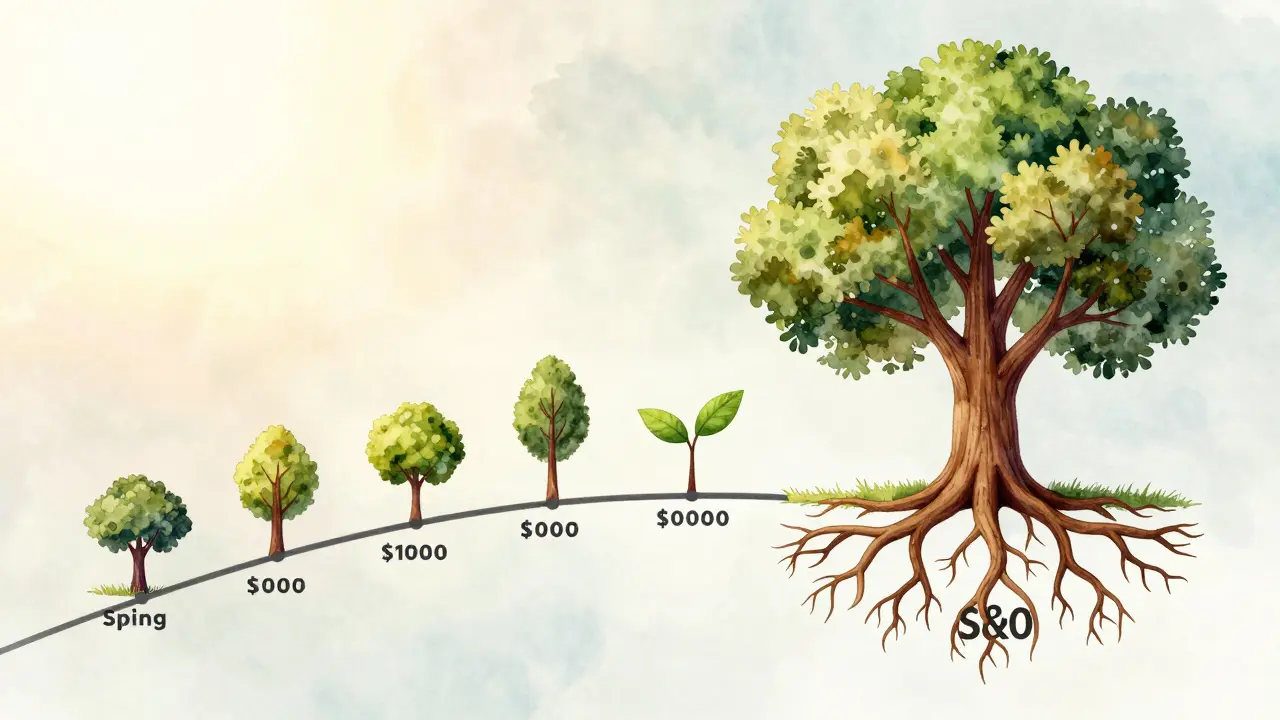
You can start with $50. Or $100. Or even $10. Many brokers let you buy fractional shares, so you can own a piece of a $4,000 stock without paying $4,000. The goal isn’t to get rich fast-it’s to build a habit. Put $50 a month into a stock you believe in. Do that for five years, and you’ll have thousands-even if the market only grows 7% a year.
Here’s a simple example:
| Year | Total Invested | Account Value |
|---|---|---|
| 1 | $1,200 | $1,245 |
| 3 | $3,600 | $3,850 |
| 5 | $6,000 | $6,900 |
| 10 | $12,000 | $17,300 |
| 20 | $24,000 | $50,000 |
That’s the power of time. You don’t need to be smart. You just need to be consistent.
What About Risk?
Yes, you can lose money. The market drops. Sometimes by 20%, 30%, even 50% in a year. But history shows it always comes back. The S&P 500-a basket of 500 big U.S. companies-has gone up in 77 out of the last 95 years. That’s a 81% win rate.
If you’re nervous, start with index funds. They track the whole market instead of one company. An ETF like VTI (Vanguard Total Stock Market) holds thousands of stocks. One purchase, instant diversification. Lower risk. Lower stress.
Think of it this way: You’re not trying to beat the market. You’re trying to ride it. And the market has a long track record of rewarding patience.
What Should You Read or Watch?
Stay away from YouTube gurus selling "get rich quick" courses. Instead, read these:
- The Intelligent Investor by Benjamin Graham-the book Warren Buffett says changed his life.
- A Random Walk Down Wall Street by Burton Malkiel-explains why most active trading fails.
- The investor relations section of company websites-free, honest, and full of real data.
Podcasts like "The Motley Fool" or "InvestED" are good for casual learning. Listen while you commute. Don’t try to absorb everything at once.
How to Stay on Track
Set up automatic investments. Link your bank account to your brokerage and schedule $50 or $100 to transfer every payday. Don’t touch it. Don’t check it every day. Check it once a quarter. That’s enough.
Ignore the noise. If you see headlines like "Stock Market Crashes!" or "Bitcoin Soars to $100K!"-pause. Don’t react. Your plan doesn’t change because of a tweet.
Remember: The best trader isn’t the one who makes the biggest gain. It’s the one who doesn’t lose everything.
Where Do You Go From Here?
After your first stock, learn about ETFs. Then learn about bonds. Then learn about taxes on investments. But don’t rush. One step at a time.
By the end of next year, you’ll know more than 90% of people who say they "want to invest." You’ll have real experience. You’ll have a small portfolio. And you’ll understand something most people never do: that wealth isn’t built in a single trade. It’s built over years, with patience, discipline, and a little bit of courage.
Do I need to be rich to start trading stocks?
No. You can start with as little as $10. Many brokers let you buy fractional shares, so you can own a piece of expensive stocks like Amazon or Google without paying thousands. The key isn’t how much you start with-it’s how consistently you add to it.
Is stock trading like gambling?
Only if you treat it that way. Buying a random meme stock because it’s trending is gambling. Buying a share of a company you understand, holding it for years, and reinvesting dividends is investing. The difference is research and patience.
How long should I hold a stock?
For beginners, hold stocks for at least 1-3 years. This lets you ride out short-term ups and downs. If you’re buying a company because you believe in its long-term future, then your timeline should match that belief-not the daily news cycle.
Can I lose all my money trading stocks?
Yes-if you put all your money into one risky stock, or use borrowed money, or trade constantly without a plan. But if you spread your money across several companies or index funds, and stick to a long-term plan, your chances of losing everything are extremely low. The market has always recovered from crashes over time.
Should I use a financial advisor?
Not at first. Most advisors charge 1% of your portfolio per year. For a $5,000 account, that’s $50 a year-money you could use to invest more. Use free tools and educational resources until your portfolio grows beyond $50,000. Then consider an advisor who charges flat fees, not percentages.
Start small. Stay consistent. Ignore the noise. The market isn’t a casino. It’s a tool-and like any tool, it works best when you understand how to use it.

Anuj Kumar
January 1, 2026 AT 13:45They say start with $10 but everyone knows the system is rigged. The big banks own the algorithms, the Fed prints money while you struggle to buy a slice of Apple. This post is just Wall Street propaganda wrapped in nice words. You think you're investing? You're just feeding the machine.
Kathy Yip
January 1, 2026 AT 17:06i just started with $20 and bought a fraction of pg... honestly it feels weird to own part of something that makes toilet paper and diapers. but like... its kinda comforting? like, people will always need these things, right? even if the world ends. or at least the next 50 years. lol
Bridget Kutsche
January 2, 2026 AT 08:05This is such a clear, grounded guide-thank you for writing it. I started with $50/month in VTI three years ago and didn’t touch it. I checked it once a quarter, panicked once during the 2022 dip, and kept going. Now it’s worth more than my entire credit card debt. Consistency beats timing every time. You don’t need to be smart. You just need to show up.
Jack Gifford
January 3, 2026 AT 22:42One thing people forget: fractional shares are a game-changer. I bought $15 of Tesla in 2020. Didn’t even know what I was doing. Now it’s worth $90. Not life-changing, but enough to prove the system works. Also, don’t overthink it. If you use it, you probably understand it better than some analyst with a CFA. Just start. Do it now. Not tomorrow.
Sarah Meadows
January 4, 2026 AT 10:19Stop encouraging this weak, passive investing nonsense. America’s strength is in bold, aggressive capital allocation. If you’re not trading actively, you’re falling behind. Index funds are for people who gave up. Real wealth comes from identifying the next disruptor-before the herd does. And no, you don’t need a finance degree. You need guts. And patriotism.
Nathan Pena
January 5, 2026 AT 15:43The author conflates trading with investing-a fundamental error that betrays a lack of academic rigor. Trading, by definition, implies speculative short-term price arbitrage; investing entails capital allocation based on intrinsic value and discounted cash flow analysis. The suggestion to purchase fractional shares of consumer staples is not merely inadequate-it is statistically indefensible as a long-term wealth-building strategy. One must consider the Sharpe ratio, beta exposure, and tax efficiency. This post is dangerously oversimplified.
Mike Marciniak
January 7, 2026 AT 03:16They told you to start with $10 but they never mention the hidden fees. Every trade gets tracked by the NSA through your broker. They sell your data to hedge funds who front-run your buys. That $50 you put in? By the time it settles, they’ve already moved the price. You’re not investing. You’re being harvested.
VIRENDER KAUL
January 7, 2026 AT 23:07One must exercise extreme caution in the realm of financial participation. The retail investor is perpetually at a disadvantage due to asymmetrical information dissemination. The institutional actors possess superior analytical infrastructure, real-time data feeds, and regulatory advantages. To suggest that a novice can succeed via fractional shares is to ignore the structural realities of modern capital markets. Discipline is essential, yet insufficient without access to insider-grade analytics. One must proceed with the utmost prudence.
Mbuyiselwa Cindi
January 9, 2026 AT 03:58I’m from South Africa and I started with R150 (about $8). Bought a bit of a local telecom stock. Didn’t know what I was doing, but I kept adding every payday. Now I’ve got a small nest egg. It’s not about being rich. It’s about being steady. You don’t need to be perfect. You just need to keep going. You got this.
Krzysztof Lasocki
January 9, 2026 AT 12:46Wow. So you’re telling me the secret to wealth is… not being an idiot? Groundbreaking. I mean, I didn’t realize the market had a 77/95 win rate. That’s like saying ‘the sun rises in the east’ and calling it financial wisdom. But hey, if you’re into slow, boring, emotionally stable wealth-building-go for it. I’ll be over here shorting meme stocks and laughing at your 7% returns.
Henry Kelley
January 11, 2026 AT 04:57just started my first stock last week-microsoft. i was nervous as hell. checked it 20 times in one day. then i remembered the advice: don’t look. so i didn’t. now it’s been a month. i still don’t know if i made or lost money. but i feel kinda proud? like i did something adult. thanks for the reminder to just… start. even if you’re scared.