

Buying your first stock can feel like walking into a casino without knowing the rules. You see headlines about people making thousands overnight, but you have no idea how to even open an account, what a ticker symbol means, or why some stocks go up when the news is bad. The truth? Stock trading isn’t about luck or insider secrets. It’s about learning a few core habits, avoiding the biggest mistakes, and giving yourself time to grow. This guide cuts through the noise and shows you exactly where to start - no jargon, no fluff, just what works.
What Stock Trading Actually Means (And What It Doesn’t)
Stock trading means buying and selling shares of companies listed on exchanges like the NYSE or NASDAQ. When you buy a share, you own a tiny piece of that company. If the company does well, the share price usually rises. If it struggles, the price falls. That’s it.
But here’s what most beginners get wrong: trading isn’t the same as investing. Trading means buying and selling frequently - sometimes within minutes or hours - trying to profit from short-term price moves. Investing means holding stocks for years, betting on a company’s long-term growth. For beginners, investing is the safer, smarter path. You don’t need to watch the market every minute. You don’t need fancy software. You just need patience and a plan.
Think of it this way: trading is like trying to time traffic lights on your daily commute. Investing is like buying a reliable car and driving it for ten years. One is stressful and unpredictable. The other gets you where you need to go.
How to Open Your First Brokerage Account
You can’t trade stocks without a brokerage account. Think of it like a bank account, but for stocks. The good news? Opening one takes less than 15 minutes and costs nothing.
Start with a reputable online broker like Fidelity, Charles Schwab, or Robinhood. These platforms are easy to use, have no account minimums, and charge $0 commissions. Avoid brokers that push complex tools or charge hidden fees. You don’t need a $500/month trading platform when you’re just starting.
To open an account, you’ll need:
- Your Social Security number
- A government-issued ID (driver’s license or passport)
- Your bank account details to link funds
Once your account is approved, transfer money from your checking account. Even $50 is enough to start. Don’t wait until you have $1,000. The sooner you get in, the sooner you learn.
What to Buy When You’re Just Starting Out
Don’t jump into individual stocks right away. Most beginners lose money trying to pick the next big winner. Instead, start with index funds or ETFs. These are baskets of hundreds or thousands of stocks bundled into one trade.
For example:
- VOO - Tracks the S&P 500 (500 of the largest U.S. companies)
- VTI - Tracks the entire U.S. stock market
- VT - Tracks global stocks (U.S. and international)
These funds cost less than $0.10 to trade. They’re diversified, meaning if one company fails, it won’t wipe you out. Over the past 20 years, the S&P 500 has returned about 9% per year on average. That’s better than 90% of professional fund managers.
Once you’re comfortable with ETFs, you can slowly add one or two individual stocks - like Apple, Microsoft, or Coca-Cola - companies you understand and use every day. But keep them under 20% of your total portfolio until you’ve built experience.
How to Actually Make a Trade
Here’s the step-by-step process:
- Log into your brokerage account.
- Type the stock or ETF symbol into the search bar (e.g., VOO or AAPL).
- Select “Buy.”
- Choose “Market Order” - this buys the stock at the current price. Don’t use limit orders yet; they’re confusing for beginners.
- Enter the number of shares. Start with 1 or 2.
- Click “Review” and then “Submit.”
You’ll see the trade confirm within seconds. The shares will show up in your account in 1-2 business days. That’s it. No complicated charts. No indicators. Just a simple buy order.
When you’re ready to sell, repeat the same steps but click “Sell” instead. Don’t panic-sell if the price dips. Hold for at least 6 months before making any emotional decisions.
The 3 Biggest Mistakes Beginners Make
Most people lose money in the stock market not because they’re bad at math - they’re bad at behavior.
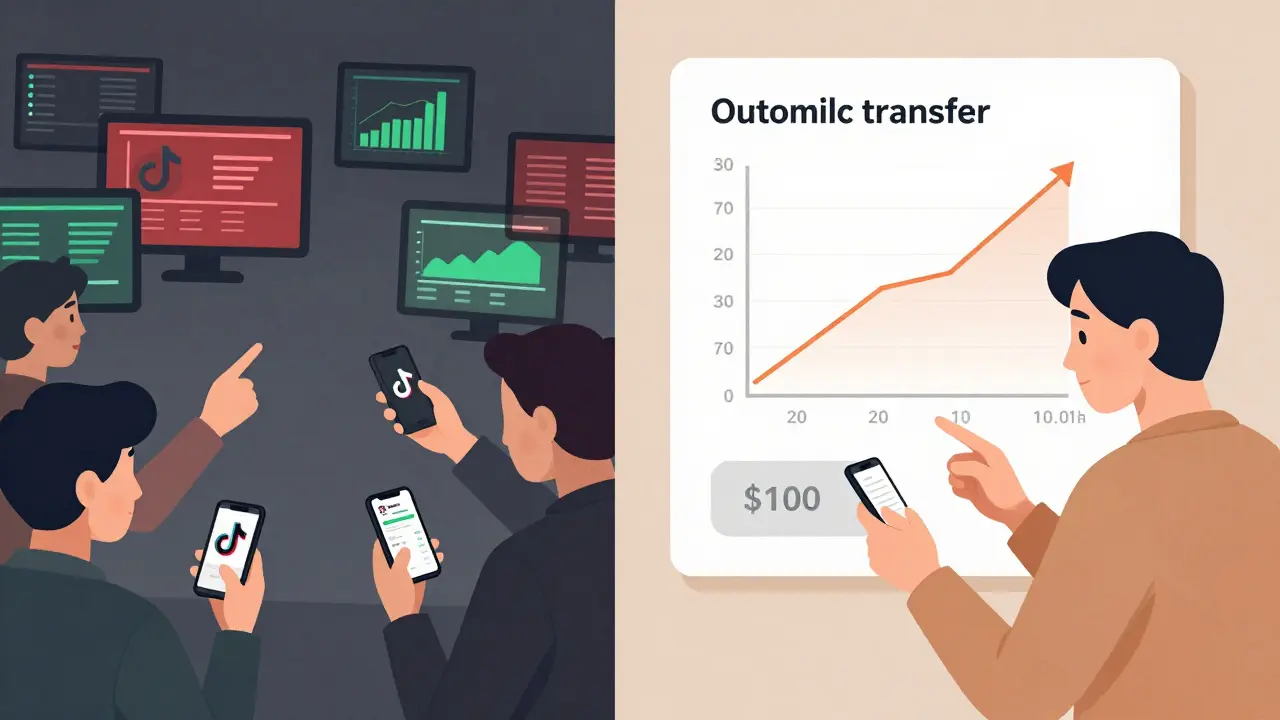
Mistake 1: Chasing hot stocks - You see TikTok videos about GameStop or Bitcoin and rush to buy. These are gambling bets, not investments. If you don’t understand the business behind the stock, don’t buy it.
Mistake 2: Trading too often - Every time you buy or sell, you risk making an emotional decision. Studies show that people who trade weekly underperform those who hold for years by 3-5% annually. Less action = better results.
Mistake 3: Putting all your money in one stock - If you buy $1,000 worth of one company and it drops 30%, you’ve lost $300. That’s painful. Spread your money across at least 5-10 different ETFs or stocks. That’s diversification. It’s boring. It’s also the only thing that keeps you from losing everything.
What to Do Every Month (The Simple Routine)
You don’t need to spend hours tracking the market. Here’s what actually works:
- Set up an automatic transfer of $50-$200 from your checking account to your brokerage account every payday.
- Buy one ETF (like VTI) with that money. No matter what the market is doing.
- Ignore the daily price swings. Check your account once a month - just to make sure it’s still there.
- Rebalance once a year: if one investment grew too big (over 30% of your portfolio), sell a little and buy more of the others.
This is called dollar-cost averaging. It means you buy more shares when prices are low and fewer when prices are high. Over time, it smooths out the ups and downs. Warren Buffett uses this exact strategy. You don’t need to be a genius to do it.
Where to Learn Without Getting Scammed
There are thousands of YouTube channels and TikTok influencers selling “get rich quick” stock tips. Most of them are selling courses or promoting risky trades. Avoid them.
Instead, use these free, trustworthy resources:
- Investopedia - Clear, simple explanations of every term you’ll hear
- The Simple Path to Wealth by JL Collins - A short book that teaches you everything you need
- Morningstar - Free ratings and analysis on ETFs and mutual funds
- SEC.gov - Official filings from companies (look up “10-K” reports for real info)
Read one article or one chapter a week. That’s all you need. Knowledge builds slowly. You don’t need to know everything tomorrow.
Realistic Expectations: What You Can Actually Make
Let’s be clear: you won’t become rich in six months. But you can build real wealth over time.
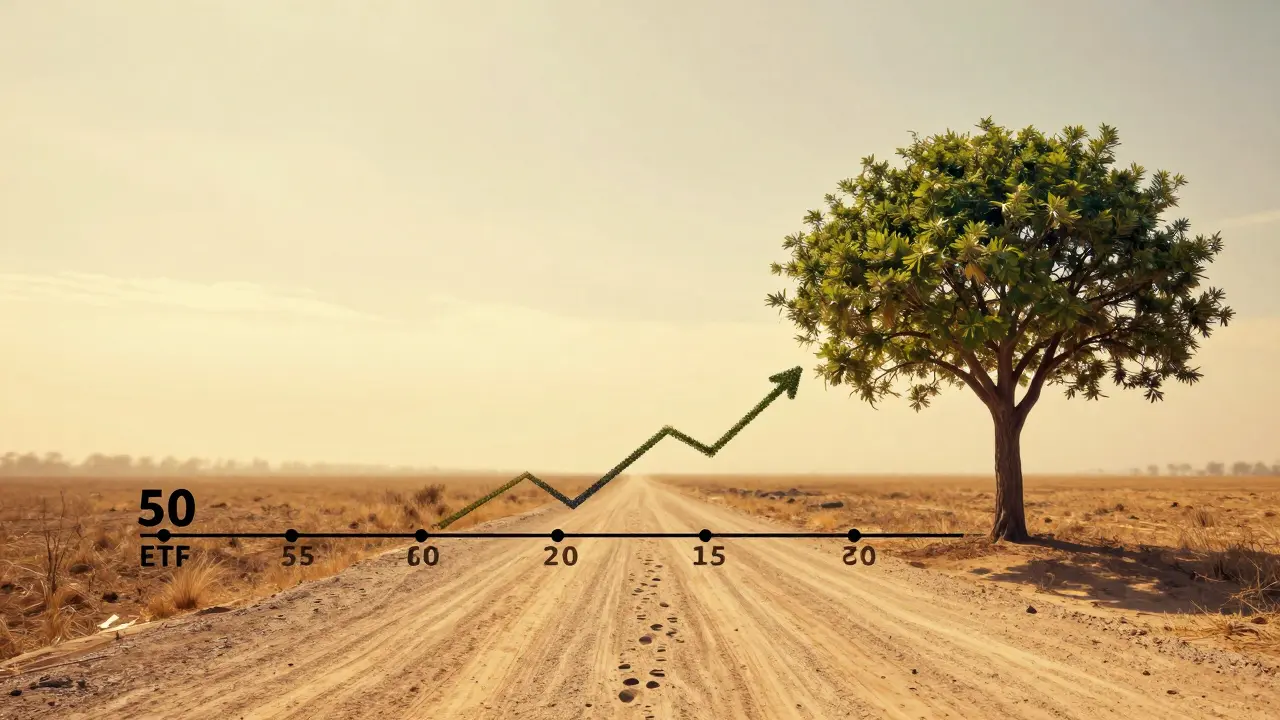
If you invest $200 a month starting at age 25, and the market returns 8% per year on average, you’ll have over $500,000 by age 65. That’s not a fantasy. That’s math.
Even if you start at 35, you’ll still have over $250,000. The key isn’t how much you make - it’s how long you stay in the game.
Forget about doubling your money in a week. Focus on growing it slowly, steadily, and without stress. That’s how real wealth is built.
Final Advice: Start Now, Stay Calm
You don’t need to know everything to start. You just need to start.
Open your account today. Transfer $50. Buy one ETF. Then forget about it for a month. Come back next month and do it again. In a year, you’ll be ahead of 90% of people who said they’d “start next year.”
The stock market doesn’t reward the smartest person. It rewards the most consistent one.
Can I start trading stocks with $100?
Yes. Many brokers let you buy fractional shares, so you can invest $100 in an ETF like VTI or VOO even if one full share costs $500. You’ll own a portion of the fund, and it grows just like a full share. Starting small is better than not starting at all.
Is stock trading risky?
All investing carries risk. But the risk drops dramatically when you diversify, avoid emotional decisions, and hold for the long term. Trading individual stocks without research is risky. Buying low-cost index funds and holding them for years is one of the safest ways to build wealth.
Should I use a financial advisor as a beginner?
Not unless you have over $100,000 to invest. Most advisors charge 1% of your assets per year. For a $5,000 portfolio, that’s $50 a year for advice you can get for free from Investopedia or a simple book. You can manage your own portfolio with basic tools and discipline.
What’s the difference between a stock and an ETF?
A stock represents ownership in one company. An ETF (exchange-traded fund) holds many stocks - sometimes hundreds - in one package. ETFs spread your risk. For example, buying VTI means you own a tiny piece of Apple, Microsoft, Tesla, and 3,500 other companies. It’s easier and safer for beginners.
How long should I hold a stock?
If you’re a beginner, hold for at least 1-3 years. Short-term trading requires skills you don’t have yet. Long-term holding lets you ride out market dips and benefit from compound growth. Most people who sell within a year lose money. Those who hold for 5+ years almost always profit.
Start small. Stay consistent. Ignore the noise. The market will be there tomorrow - and next year - and for decades after. Your job isn’t to predict it. Your job is to be in it, quietly and steadily, for the long haul.

Gabby Love
January 16, 2026 AT 07:23Just started with $75 in VOO last month. Didn’t even check it for three weeks. Came back and it was up 2%. Feels good to just let it sit.
allison berroteran
January 18, 2026 AT 05:11I used to think trading was about reading charts and timing the market like some kind of financial ninja. Then I read JL Collins and realized I was trying to solve a math problem with a hammer. The real secret? Show up. Every month. Buy the index. Don’t look. Repeat. It’s not sexy. But neither is brushing your teeth-and yet, here we are, with all our molars intact. The market doesn’t care if you’re brilliant. It only cares if you’re persistent. And honestly? That’s the most powerful thing any of us can offer.
Jen Kay
January 19, 2026 AT 20:48Wow. Someone actually wrote a guide that doesn’t sound like a crypto influencer trying to sell NFTs. Refreshing. I’ve seen so many ‘beginner guides’ that are just thinly veiled affiliate links. This? This is what happens when someone remembers that education isn’t a product. Kudos.
Michael Thomas
January 20, 2026 AT 16:29ETFs are for cowards. If you want real wealth, you pick winners. AAPL, NVDA, TSLA. That’s it. No fluff. Just guts and conviction.
Abert Canada
January 21, 2026 AT 15:43As a Canadian, I’ve been using Questrade for years. Same idea-dollar-cost average into VTI. No fees, no drama. The market doesn’t care where you live. It only cares if you show up. Also, your point about avoiding financial advisors under $100k? Spot on. My cousin paid $800 last year for advice he could’ve gotten from a Reddit thread.
Thabo mangena
January 22, 2026 AT 07:02Allow me to express my profound appreciation for this lucid exposition on the foundational tenets of equitable participation in capital markets. In my native South Africa, where access to financial literacy remains a structural challenge, such clarity is not merely valuable-it is revolutionary. The principle of dollar-cost averaging, when applied with discipline, transcends geography and socioeconomic status. May this message reach those who believe wealth is reserved for the privileged few.
Karl Fisher
January 23, 2026 AT 04:32Okay but have you considered that the entire stock market is just a giant Ponzi scheme rigged by the Fed? I mean, why do you think they print money like it’s confetti? VOO? Please. That’s just the glitter on the dumpster fire. I bought Dogecoin in 2021 and turned $500 into $18k. Then I gave it all to a guy on Discord who said he could ‘unlock the blockchain.’ Still waiting on my return.
Buddy Faith
January 23, 2026 AT 10:07Start small. Stay calm. Buy the index. Dont check it. Do it again next month. Thats it. No drama. Just grow.
Sandi Johnson
January 24, 2026 AT 03:35Michael Thomas above me is the reason we can’t have nice things. Also, I bought VOO with my tax refund last year. It’s now worth 20% more. I still don’t know what a P/E ratio is. And I’m not even sorry.
Eva Monhaut
January 24, 2026 AT 09:11I used to think I needed to be a Wall Street wizard to play this game. Then I realized I didn’t need to understand every cog in the machine-just enough to keep the engine running. I set up auto-investments on my phone while waiting for coffee. That’s it. No spreadsheets. No panic. No FOMO. Just quiet, stubborn consistency. The market doesn’t reward the loudest voice. It rewards the one who never leaves the table.
Xavier Lévesque
January 25, 2026 AT 19:00Funny how people think they’re ‘investing’ when they buy one stock and call it a portfolio. I had a buddy put $10k into AMC because he liked the theater snacks. Lost half. Now he says ‘the system is rigged.’ Nah. You just didn’t diversify. And now you’re mad the universe didn’t reward your snack-based thesis.
Jen Kay
January 26, 2026 AT 03:38Michael, I admire your confidence. Truly. But I also remember the guy who shorted Tesla in 2018 and called it ‘a bubble.’ He’s still waiting for it to crash. Meanwhile, his portfolio is smaller than his ego. The market doesn’t care how loud you are. It only cares how long you’re right. And patience? That’s the only edge you can’t buy.