
Swing Trading: How to Capture Market Moves Without Day Trading
When you hear swing trading, a trading style that holds positions for several days to capture medium-term price movements. Also known as medium-term trading, it sits between day trading and long-term investing—perfect for people who want to make money from the market without spending hours in front of a screen. Unlike day traders who close every position by market close, swing traders let trades run for days or even weeks, riding the natural ebb and flow of price action. This approach cuts down on stress, reduces transaction costs, and avoids the emotional rollercoaster of minute-by-minute trading.
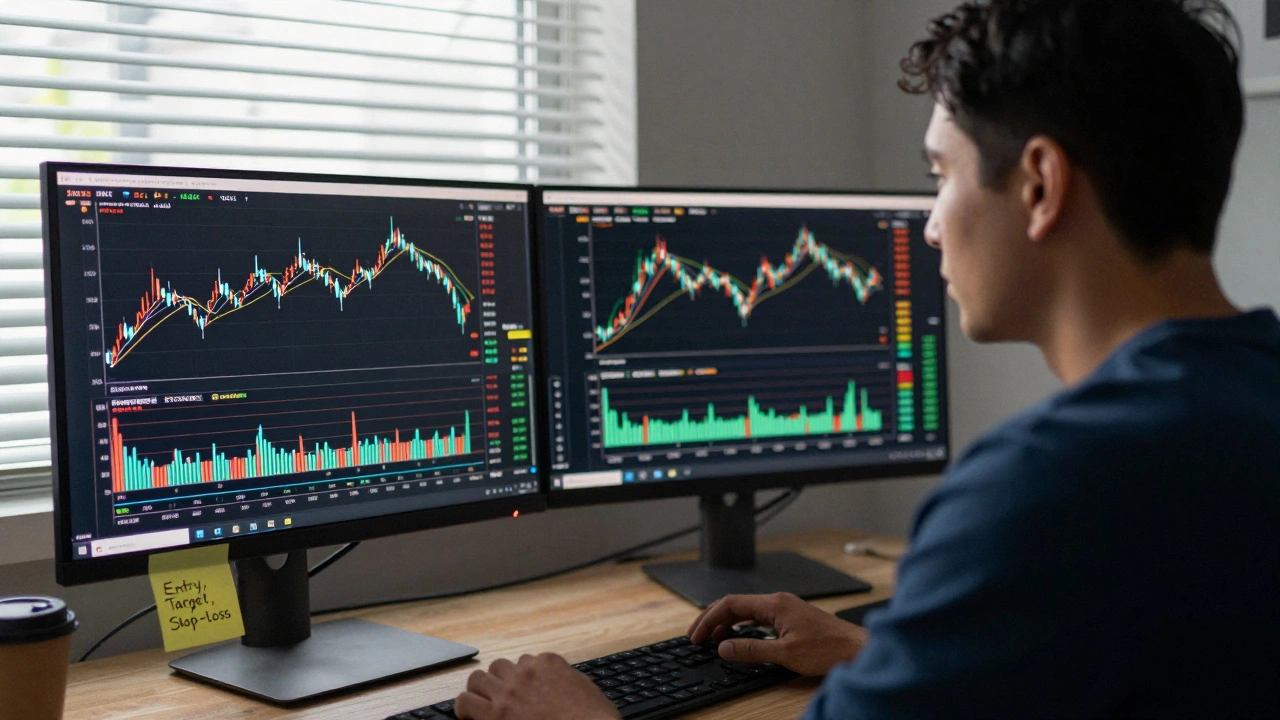
Swing trading relies heavily on technical analysis, the study of price patterns and market data to predict future movements. Traders look at moving averages, support and resistance levels, and volume spikes to spot when a stock is likely to move up or down. It’s not about guessing—it’s about reading what the market is telling you through price and volume. You don’t need fancy indicators. Many successful swing traders use just three or four tools and stick to them. And because swing trades last longer than day trades, you have more room for price to move in your favor, which means fewer false signals and better risk-reward ratios.
Another key part of swing trading is risk management, the practice of protecting your capital by setting clear stop-losses and position sizes. You can’t afford to let one bad trade wipe out weeks of gains. That’s why smart swing traders never risk more than 1-2% of their account on a single trade. They also avoid chasing stocks that have already run up. Instead, they wait for pullbacks to strong support levels before jumping in. This discipline separates the traders who make money from those who just guess.
Swing trading doesn’t require you to be glued to your computer. You can check your positions once a day, maybe after the market closes. That’s why it’s popular with working professionals, parents, and anyone who wants to build wealth without turning trading into a full-time job. The best swing traders don’t try to catch every move—they wait for high-probability setups and let the market come to them.
You’ll find plenty of posts here that break down real swing trading setups, show you how to read charts without overcomplicating them, and teach you how to control your emotions when the market gets wild. Whether you’re just starting out or looking to refine your strategy, the guides below give you practical, no-fluff advice on how to trade with confidence—without the hype.
Stock Trading: How to Turn Market Moves Into Real Profit
- Lorcan Sterling
- 15 Comments
Stock trading isn't luck-it's a skill built on discipline, strategy, and consistent execution. Learn how to turn market moves into real profit with proven methods, common mistakes to avoid, and a clear path to start.
Read more