
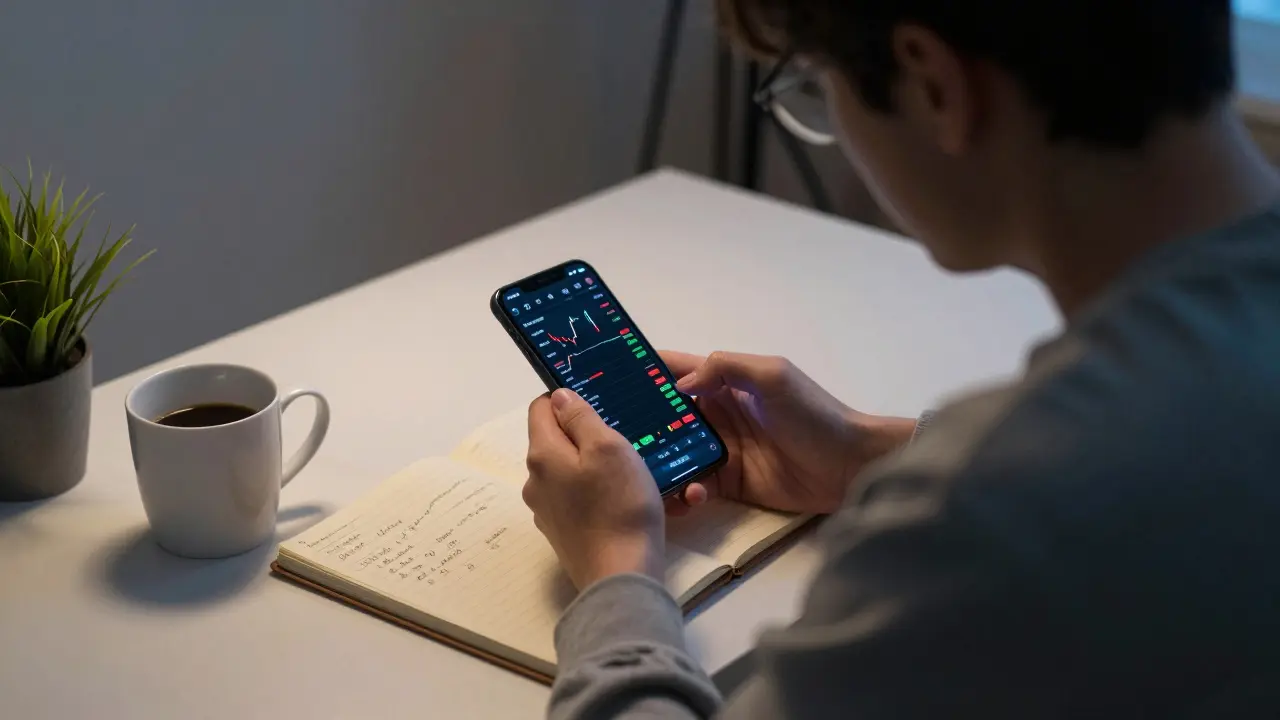
Stock trading isn’t what it was ten years ago. You don’t need a floor seat at the NYSE or a $10,000 account to get in. Today, a 19-year-old in Milwaukee can buy a fraction of an Apple share at 2 a.m. using a phone app. And millions are doing it. But the rules have changed - and so have the risks. If you’re thinking about jumping into the market now, you need to know what’s different, what’s dangerous, and what actually works.
The Rise of the Retail Trader
In 2020, retail trading exploded. Thanks to zero-commission platforms like Robinhood, Webull, and Fidelity, everyday people started buying stocks like they were buying coffee. By 2025, retail investors made up nearly 28% of daily U.S. stock volume, up from just 12% in 2019. That’s not a fluke. It’s a structural shift.
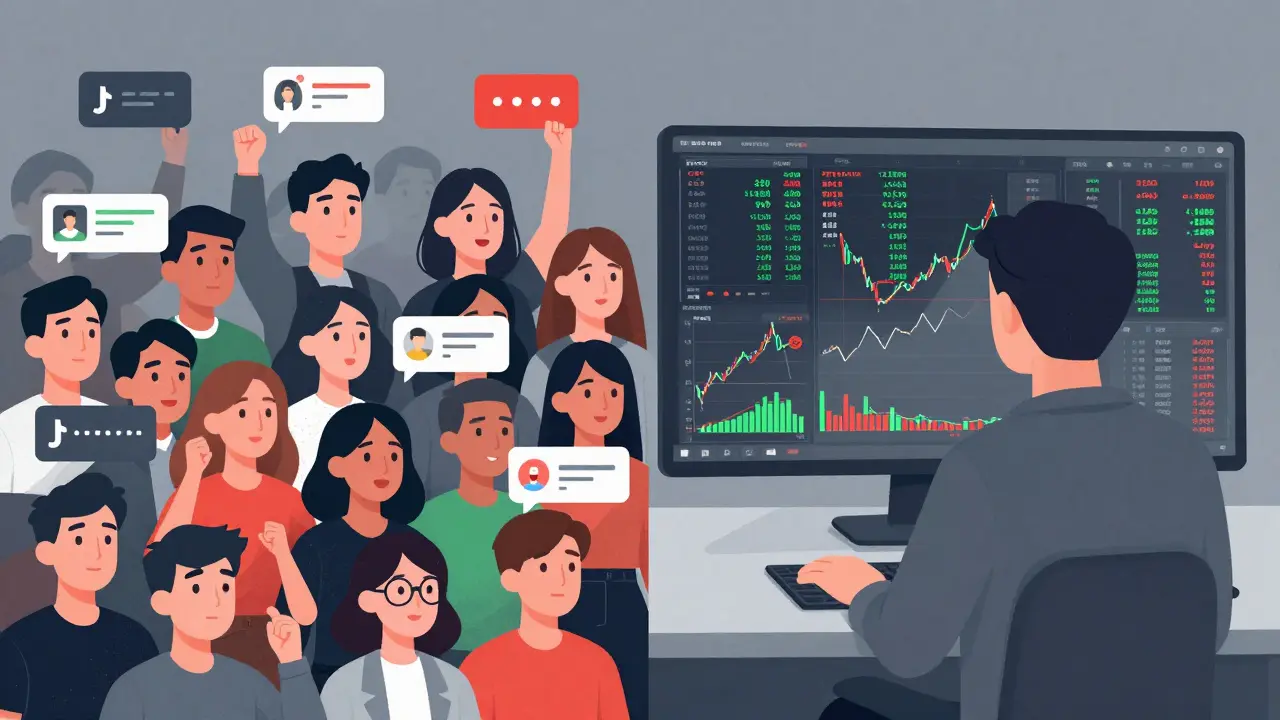
These aren’t just hobbyists. Many are young, tech-savvy, and deeply informed. They follow Reddit threads, TikTok analysts, and Discord groups. They trade options, meme stocks, and ETFs. They don’t wait for quarterly earnings reports - they react to news in real time. But here’s the catch: most of them lose money. A 2024 study by the University of Chicago found that 68% of retail traders who opened accounts between 2020 and 2023 lost money over 12 months. The ones who won? They didn’t chase trends. They built systems.
Algorithmic Trading Is Everywhere - Even for Beginners
You might think algorithms are only for hedge funds with billion-dollar servers. Not anymore. Brokerage apps now offer automated tools that let you set up basic algorithms with a few clicks. You can tell your app to buy a stock if it drops 5% in an hour, or sell if volume spikes. These aren’t complex AI models - they’re simple rules-based triggers.
Platforms like Interactive Brokers and Charles Schwab now include “Smart Orders” and “Conditional Triggers.” Even Robinhood has a “Dollar-Cost Averaging” feature that buys shares on a schedule. These tools reduce emotional trading - the #1 reason people lose money. But they’re not magic. If you set a trigger based on a viral tweet, you’re still gambling. The key is using automation to enforce discipline, not to chase hype.
Volatility Isn’t a Bug - It’s the Feature
Markets are more volatile than ever. In 2024, the S&P 500 had 18 days with swings over 2%. That’s more than double the average from 2010-2019. Why? Three things: AI-driven trading, geopolitical uncertainty, and Fed policy shifts. Central banks aren’t printing money like they did in 2020. Interest rates are higher, and inflation is sticky. That means stocks don’t just go up - they jump, dip, and bounce unpredictably.
What does this mean for you? Don’t panic-sell on a bad day. Don’t buy the “next Tesla” just because it’s trending. Instead, focus on what you can control: position size, stop-losses, and time horizon. If you’re trading short-term, assume every trade could swing 5-10% in a day. Plan for it. Use stop-loss orders. Never risk more than 1-2% of your account on a single trade.
The Hidden Costs You’re Probably Ignoring
Zero commissions sound great. But they’re not free. Brokerages make money in other ways. The biggest one? Payment for order flow. When you click “buy,” your broker doesn’t send your order to the public exchange. It sells it to a market maker like Citadel or Virtu. These firms pay your broker for the right to execute your trade. It’s legal. But it creates a conflict of interest.
Here’s how it affects you: your order might not get the best possible price. A 2023 SEC report found that retail orders executed via payment-for-order-flow brokers received prices 0.2-0.4% worse than the national best bid. That doesn’t sound like much - but on a $5,000 trade, that’s $10-$20 lost. Over a year, that adds up. If you’re serious about trading, use a broker that shows you the full execution report. Think: Interactive Brokers, TradeStation, or Fidelity. Avoid apps that hide this data.
Education Is the Only Edge Left
There’s no secret formula. No guru with a “100% win rate” system. The only edge you have left is knowledge. And not the kind you get from a 60-second TikTok video.
Learn how to read a balance sheet. Understand the difference between EPS and free cash flow. Know what a P/E ratio really tells you - and when it’s misleading. Study how interest rates affect tech stocks versus utilities. Read real reports, not headlines. The SEC’s EDGAR database is free. So is Yahoo Finance. Start there.
One trader I know in Chicago started with $2,000. He spent six months learning accounting basics before making his first trade. He didn’t touch meme stocks. He bought dividend-paying companies with strong balance sheets and watched them grow. In two years, he doubled his money - without ever staying up until 3 a.m. watching charts.
What Works Now - And What Doesn’t
Here’s what’s working in 2026:
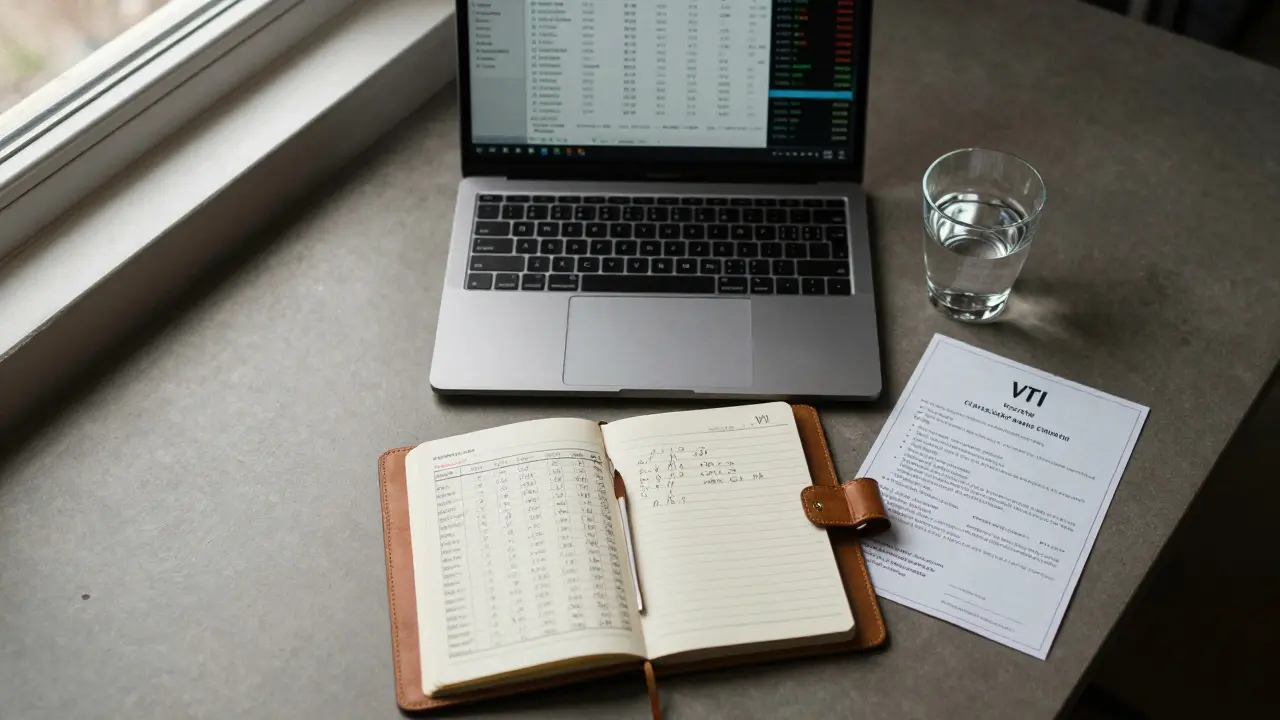
- Dollar-cost averaging into broad ETFs like VTI or SPY. It’s boring, but it beats 80% of active traders.
- Trading small positions with tight stop-losses. If you’re day trading, keep your risk under 1% per trade.
- Using limit orders instead of market orders. You control the price. No surprises.
- Tracking your trades in a journal. Write down why you bought, what you expected, and what actually happened.
Here’s what’s not working:
- Chasing “guaranteed” gains from influencers.
- Buying stocks because they’re trending on Twitter.
- Using leverage (margin) without a clear plan.
- Trading without a written strategy.
Tools You Actually Need
You don’t need 10 apps. You need three:
- A broker with transparency - Fidelity or Interactive Brokers for real data and low hidden costs.
- A trade journal - Use Google Sheets or a free app like TraderSync. Log every trade. Review weekly.
- A market scanner - Finviz or TradingView. Set alerts for volume spikes, earnings dates, or price breaks. Don’t stare at charts - wait for signals.
That’s it. No bots. No signals. No “crypto coin flips.” Just discipline, data, and patience.
Final Thought: This Is a Marathon, Not a Sprint
The new age of stock trading gives you more power than ever. But power without control is dangerous. You can trade from anywhere. You can buy a stock in seconds. But the market doesn’t care how fast you click. It cares if you understand what you’re doing.
Most people treat trading like a lottery. The smart ones treat it like a skill. And skills take time. Build yours slowly. Learn the math. Respect the risk. Stay out of the noise. If you do that, you won’t just survive the new age of trading - you’ll thrive in it.
Can you really make money trading stocks in 2026?
Yes - but not by chasing hot stocks or listening to influencers. People who make consistent money in 2026 treat trading like a business. They use stop-losses, track every trade, stick to a strategy, and avoid emotional decisions. Most successful traders don’t day trade. They invest small amounts regularly and let compounding work over time.
Is day trading still a good idea?
For almost everyone, no. Day trading requires hours of focus, deep market knowledge, and emotional control. The odds are stacked against you. A 2024 study by the SEC found that 87% of day traders lose money over a 12-month period. If you’re going to try it, start with paper trading, risk less than 1% per trade, and treat it as a learning exercise - not a way to get rich quick.
What’s the best platform for beginners?
Fidelity or Charles Schwab. Both offer free trades, no hidden fees, detailed execution reports, and strong educational resources. Avoid apps that gamify trading or push you toward options and meme stocks. Your goal isn’t to feel like you’re playing a game - it’s to build real financial skills.
How much money do I need to start?
You can start with $100. Many brokers let you buy fractional shares. But starting small doesn’t mean starting without a plan. Even with $100, you should know why you’re buying a stock, what your exit strategy is, and how much you’re willing to lose. The amount of money matters less than your discipline.
Should I use leverage or margin?
Don’t. Margin lets you borrow money to trade, which can multiply your gains - but also your losses. In 2024, over 40% of retail margin accounts had negative returns. If you’re not experienced, leverage is a fast track to losing your entire account. Wait until you’ve traded profitably for at least a year before even considering it.

Chris Atkins
January 5, 2026 AT 07:16Just started with $50 on Fidelity and bought a slice of VTI
no drama no memes just watching it grow
been 6 months and im chill as hell
Wilda Mcgee
January 5, 2026 AT 11:20OMG YES THIS. I used to scroll TikTok for 'stock tips' and lost my entire pizza budget on AMC
Then I read a real balance sheet. Like actual words. With numbers. And I cried
Now I dollar-cost average into ETFs while my friends are still asking if Dogecoin will moon
It’s not sexy but it’s the only thing that works when the market’s playing Jenga with your soul
Also stop using market orders. Limit orders are your best friend. They don’t yell at you. They just quietly save your ass
And yes I’m still mad that I paid $0.40 extra per share because I was lazy. That’s a latte a week for a year
Stop treating trading like a video game. It’s not Fortnite. You don’t respawn with $10K
Jen Becker
January 5, 2026 AT 18:44They’re lying. The market is rigged. Citadel owns everything. They’re watching you right now through your phone
I know because my brother’s friend’s cousin worked at a data center
And they’re using your trades to manipulate Bitcoin
Also Robinhood is a cult
Ryan Toporowski
January 7, 2026 AT 09:30So happy to see this post 🙌
I started with $200 and a Google Sheet
Now I’ve got 3x my money and zero anxiety 😊
Trade journal = life saver 📓
And no leverage. Ever. 💪
Samuel Bennett
January 8, 2026 AT 14:40Actually the SEC report says 0.2–0.4% slippage on PFOF but you forgot to cite the exact document number
And you said 'ETFs like VTI or SPY' - SPY is an ETF but VTI is an ETN? No wait VTI is an ETF too
But you misspelled 'execution' as 'excecution' in the paragraph about brokers
Also 'Dollar-Cost Averaging' is a myth. It's just averaging down with extra steps
And why are you recommending Finviz? Their data lags 15 minutes
And you didn't mention the 2025 SEC proposal to ban payment for order flow
Also your Chicago trader example - did you verify his tax returns? No? Then it's anecdotal
And you used 'TikTok analysts' - that's not a real term. They're influencers
And why is the heading 'Hidden Costs' capitalized like that? Inconsistent title case
Rob D
January 9, 2026 AT 02:47Y’all think you’re smart because you bought SPY
Real investors don’t use apps
Real investors have accounts at Goldman Sachs
Real investors don’t care about ‘fractional shares’
You’re all just peasants with iPhones
I bought my first stock in 1998 on a dial-up modem
You think you’re trading? You’re just clicking buttons while the real players eat your lunch
And don’t get me started on ‘meme stocks’ - you people are the reason America’s economy is a dumpster fire
Go back to TikTok
Franklin Hooper
January 10, 2026 AT 09:02While the post contains a superficially reasonable framework
it fails to address the systemic erosion of price discovery mechanisms
particularly in the context of algorithmic front-running enabled by retail order flow aggregation
the normalization of behavioral finance tropes as ‘discipline’ is a dangerous reduction
and the uncritical endorsement of ETFs ignores their structural liquidity risks during stress events
also ‘dollar-cost averaging’ is merely a psychological crutch for those unable to time the market
and why is Finviz recommended? Their data feed is non-compliant with NMS Rule 605
and the reference to ‘compounding’ without a mathematical model is intellectually lazy
the entire post reads like a BuzzFeed listicle dressed in Bloomberg terminal pajamas
Samar Omar
January 11, 2026 AT 01:56As an Indian finance graduate who moved to Silicon Valley, I find this discussion both quaint and dangerously naive
In Mumbai, retail traders use Telegram bots with AI sentiment analysis to scalp Nifty options
Here in the US, you’re still debating whether to use limit orders
The real edge isn’t in reading balance sheets - it’s in understanding how retail order flow is packaged and sold to HFT firms
And you think ‘Fidelity’ is transparent? Their dark pool volume is 37% higher than their public executions
Also, why is no one talking about the SEC’s 2025 rule change on short selling disclosure? That’s where the real volatility is brewing
And your ‘$2,000 to $4,000’ trader? He probably got lucky on a dividend re-investment cycle during a Fed pause
Real wealth isn’t built by buying SPY - it’s built by owning the infrastructure that enables retail trading
Like the data pipelines. The clearinghouses. The API providers
But no, you’d rather watch YouTube videos about ‘financial independence’
How sad
chioma okwara
January 12, 2026 AT 07:40u r right abt the hidden costs but u missd the biggest one
the time u waste staring at charts
im from lagos
we dont even have robinhood here
we use MT4 and trade forex with 100:1 leverage
and we still make more than u
u guys are too soft
no discipline no wins
John Fox
January 12, 2026 AT 22:49been doing this for 5 years
still dont know what i'm doing
but i'm not losing
so i guess that's something
Tasha Hernandez
January 14, 2026 AT 21:58Of course you’re saying this
because you’re one of those people who got lucky once and now thinks they’re a guru
Everyone who says ‘just buy VTI’ is secretly rich and doesn’t want you to know how
And your ‘Chicago trader’? He’s probably a broker’s shill
They always have a ‘friend’ who doubled their money
Meanwhile I lost $3K on a meme stock and now my cat won’t look at me
It’s not about discipline
It’s about who you know
And who’s pulling the strings
And why are you so calm? Are you on something?
Anuj Kumar
January 15, 2026 AT 04:09you think america is the only place trading happens
in india we have 50 million retail traders
they use whatsapp groups
no apps no journals
they just follow the crowd
and they make money
you are too westernized
the market is not about spreadsheets
it is about guts
Christina Morgan
January 16, 2026 AT 18:28Thank you for writing this. I’m 22 and just opened my first brokerage account
I used to think trading was about being fast
Now I realize it’s about being consistent
I started with $100 and bought a single share of VOO
Every month I add $50
I don’t check it every day
I just trust the math
And I keep a simple spreadsheet
It’s not glamorous
But I feel proud
And that’s more than I ever felt when I lost $200 on Dogecoin
Kathy Yip
January 18, 2026 AT 11:47What if the real problem isn’t the traders
but the system that makes us feel like we have to gamble to survive
Why is investing in yourself - education, health, community - not seen as ‘wealth building’
And why do we think the market is the only path to security
I get the advice
But I wonder if we’re just being sold a story
That if we just trade right
We can escape the grind
What if the grind is the point
And the market is just another distraction
…I don’t know
I’m still figuring it out
Bridget Kutsche
January 19, 2026 AT 12:45YES. This is exactly what I tell my niece
She’s 19, works at a coffee shop, and wants to ‘get rich quick’
I showed her how to set up a $25 weekly auto-invest into VTI
She didn’t believe me at first
Now she’s excited to see her balance grow
No drama. No stress. No 3 a.m. panic checks
And she’s learning real stuff - like what dividends are
And why inflation matters
It’s not flashy
But it’s real
You don’t need to be a genius
You just need to be patient
And show up
Wilda Mcgee
January 21, 2026 AT 04:40Christina, I love this so much
I used to be the one scrolling TikTok at 2 a.m. looking for the next ‘10x’ stock
Now I’m the one teaching my cousin how to use a trade journal
She’s 17 and already knows what a P/E ratio is
That’s the real win
Not the money
But the mindset