
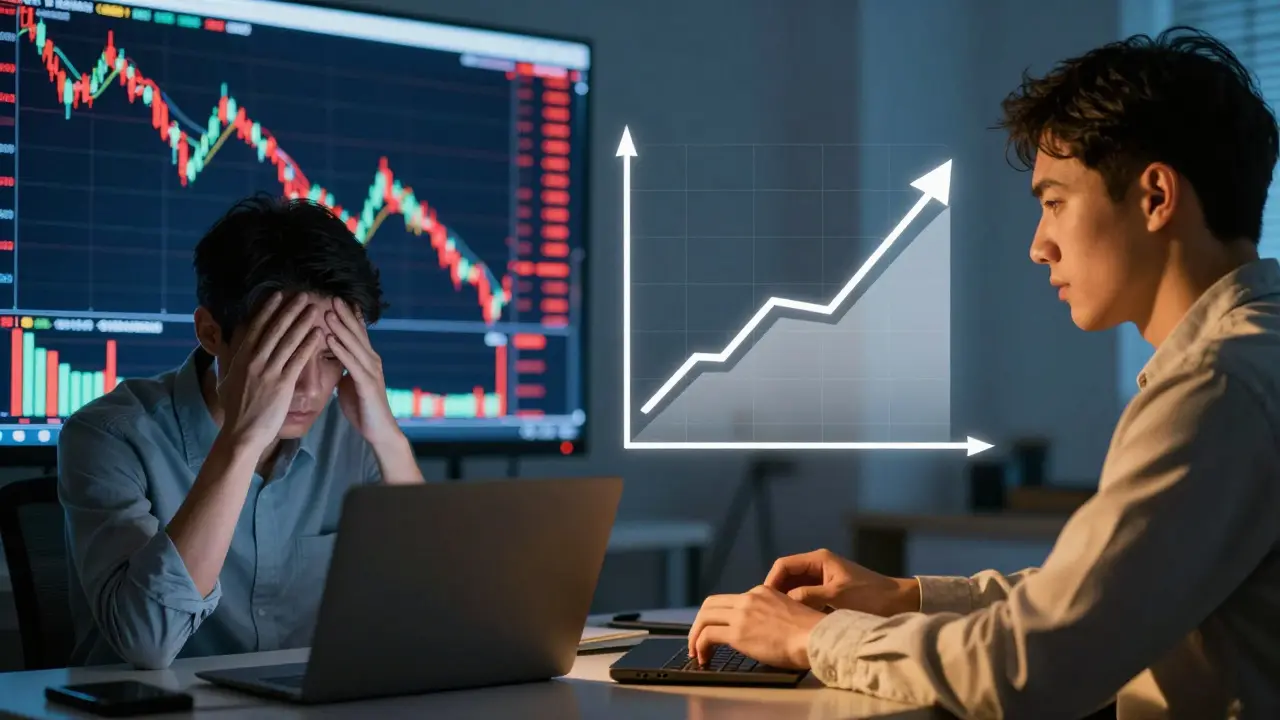
Most people lose money not because they pick bad stocks, but because they do the same things over and over again-things that seem smart but are actually costly. You don’t need to be a Wall Street expert to avoid these traps. You just need to know what they are and how to stop them before they hurt your money.
Chasing Past Performance
You see a fund or stock that went up 50% last year and think, ‘I want in.’ That’s the most common mistake investors make. Past performance doesn’t predict future results. In 2023, crypto and AI stocks soared. By mid-2024, many of them had dropped 40% or more. People who bought at the peak didn’t get rich-they got stuck holding assets that took years to recover. The market doesn’t reward you for being late. It rewards you for being patient and disciplined. If something has already had its big run, it’s usually priced for perfection. That means there’s little room for error.
Trying to Time the Market
You think you can sell before a crash and buy back at the bottom. You can’t. Even professional investors get this wrong most of the time. In 2020, when the pandemic hit, the S&P 500 dropped 34% in under a month. People who sold then locked in losses. Those who stayed invested saw their portfolios bounce back and hit new highs by late 2020. Missing just the 10 best days in the market over 20 years cuts your returns in half. You don’t need to predict the future-you just need to stay in it.
Putting All Your Money in One Stock
It’s tempting to bet big on your favorite company-Tesla, Apple, Nvidia. But if that one company stumbles, your whole portfolio can crash. In 2022, Tesla dropped 65% in a single year. Investors who had 70% of their portfolio in one stock lost more than half their wealth overnight. Diversification isn’t boring-it’s your safety net. Spread your money across different sectors, asset classes, and geographies. Even a simple portfolio with 10-15 different stocks and an index fund cuts your risk dramatically.
Ignoring Fees
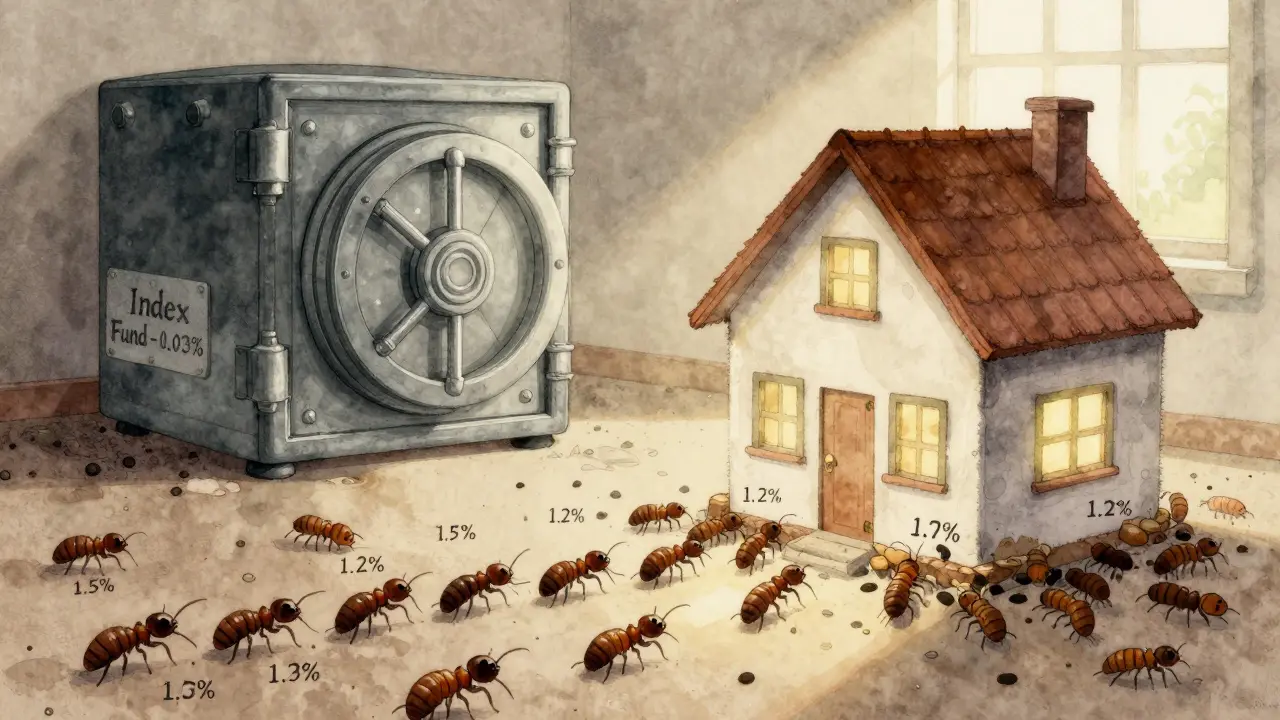
Fees eat your returns slowly, like termites in a house. A mutual fund charging 1.5% a year might seem small. But over 30 years, that fee can cost you more than $200,000 on a $100,000 investment. Low-cost index funds like those from Vanguard or Fidelity charge 0.03% to 0.10%. That’s 15 to 50 times cheaper. Over time, that difference turns into hundreds of thousands of dollars. Always check the expense ratio before investing. If you’re paying more than 0.5% for a passive fund, you’re overpaying.
Not Having a Plan
Most people invest without a goal. They say, ‘I want to get rich,’ but that’s not a plan. A real plan answers: When do I need the money? What’s it for? How much risk can I handle? A 25-year-old saving for retirement in 40 years can handle volatility. A 58-year-old saving for a house down payment in two years cannot. Your plan should match your timeline and risk tolerance. Without it, you’ll panic when markets dip or get greedy when they rise. Write it down. Review it once a year. Stick to it.
Emotional Investing
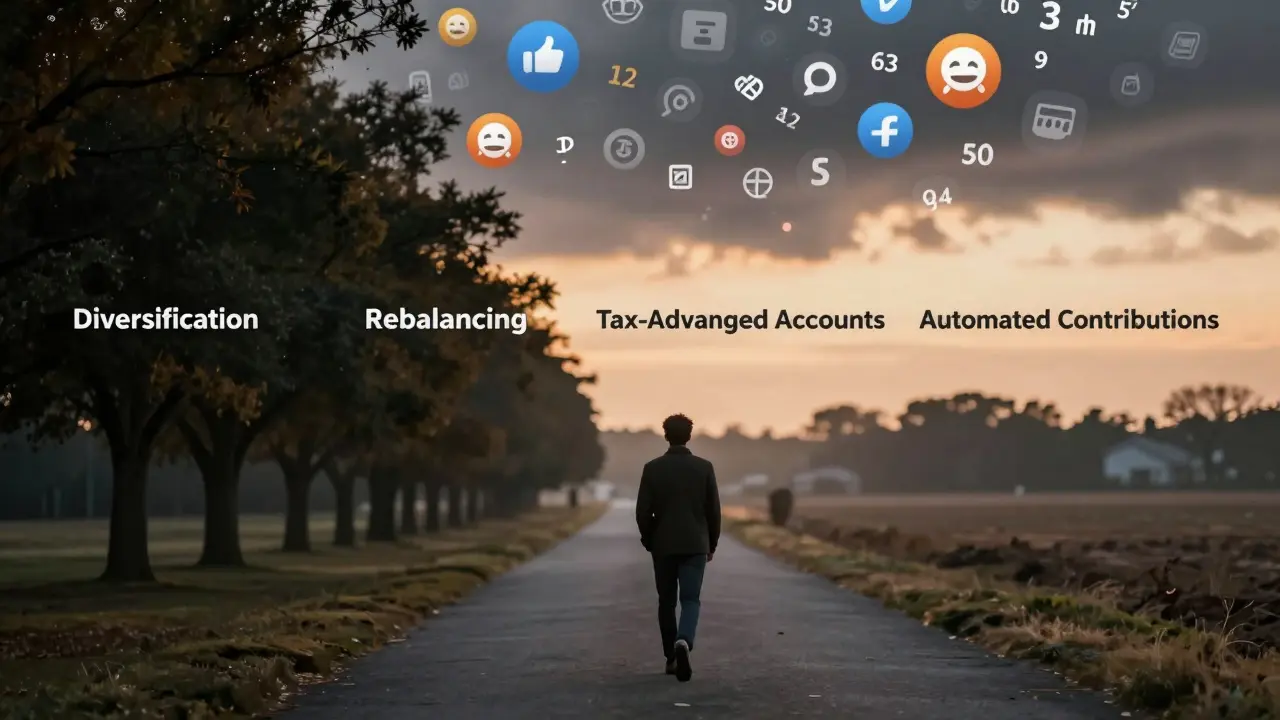
Fear and greed are your worst enemies. When the market crashes, you sell out of panic. When it’s booming, you buy in because everyone else is. This is called ‘buy high, sell low’-the exact opposite of what you should do. A 2024 study from the Dalbar Institute found that the average investor earned just 3.5% annually over 20 years, while the S&P 500 returned 9.5%. The gap? Emotions. The fix? Automate. Set up automatic contributions. Ignore daily news. Let your plan do the work.
Overlooking Taxes
It’s not just what you earn-it’s what you keep. Selling stocks in a taxable account triggers capital gains taxes. If you hold less than a year, you pay your full income tax rate-sometimes over 30%. Hold for over a year, and you pay 15% or 20%. Use tax-advantaged accounts like IRAs and 401(k)s. They let your money grow tax-free or tax-deferred. Also, consider tax-loss harvesting: selling losing investments to offset gains. This simple move can reduce your tax bill by thousands.
Not Rebalancing
Your portfolio drifts over time. If stocks go up, they become a bigger part of your portfolio. If bonds drop, they shrink. That means you’re taking more risk than you planned. Rebalancing means selling some of what’s done well and buying more of what’s lagged. Do it once a year, or when your allocation shifts by more than 5%. It forces you to sell high and buy low-without emotion. It’s mechanical, simple, and powerful.
Following Social Media Advice
Reddit threads, TikTok gurus, and YouTube influencers aren’t financial advisors. They’re content creators. Many push high-risk bets like meme stocks or leveraged ETFs. In 2021, GameStop and AMC surged on social hype-then collapsed. People who followed the hype lost everything. Real investing isn’t viral. It’s slow, quiet, and boring. Stick to trusted sources: books, financial planners, or data-driven platforms like Morningstar or Yahoo Finance. Ignore the noise.
Waiting for the ‘Perfect’ Time to Start
You think you need more money, more knowledge, or the right moment. But the best time to start investing was 10 years ago. The second-best time is today. Even $100 a month invested in an index fund since 2015 would be worth over $25,000 today. Compound growth doesn’t care how much you start with-it cares how long you stay in. The longer you wait, the harder it becomes to catch up. Start small. Stay consistent. Let time do the heavy lifting.
What to Do Instead
Here’s a simple framework to avoid all these mistakes:
- Open a low-cost brokerage account (Fidelity, Vanguard, or Charles Schwab).
- Invest in a total market index fund (like VTI or VTSAX).
- Contribute automatically every payday.
- Rebalance once a year.
- Ignore the news. Don’t check your portfolio daily.
- Keep 3-6 months of expenses in cash for emergencies.
- Use tax-advantaged accounts first (401(k), IRA).
This isn’t glamorous. But it works. Over 30 years, someone who follows this plan with $500 a month will have over $1.2 million-even with average market returns. You don’t need to be smart. You just need to be consistent.
What’s the biggest mistake new investors make?
The biggest mistake is trying to time the market or chase hot stocks. Most people buy high and sell low because they react to emotions instead of sticking to a plan. The solution is to automate investments and ignore short-term noise.
Is it too late to start investing in 2025?
No. It’s never too late. Even starting with $100 a month at age 45 can grow to over $200,000 by age 65 with average market returns. The key isn’t how much you start with-it’s how long you stay invested. Time is your greatest advantage.
Should I invest in individual stocks or index funds?
For most people, index funds are the better choice. They offer instant diversification, lower fees, and better long-term returns than most individual stocks. You don’t need to pick winners-you just need to own the whole market. Individual stocks can be part of a portfolio, but they shouldn’t be the core.
How often should I check my investments?
Once a quarter is enough. Checking daily or weekly leads to emotional decisions. Markets move every day, but your goals don’t. Review your progress once a year, rebalance if needed, and keep contributing. The less you watch, the more you earn.
What’s the best way to start investing with little money?
Start with a low-cost index fund through a platform like Fidelity or Charles Schwab. Many allow automatic investments as low as $10 or $25 per month. Use your 401(k) if your employer offers one-especially if they match contributions. That’s free money. Consistency matters more than the amount.

Emmanuel Sadi
December 18, 2025 AT 21:55Nicholas Carpenter
December 20, 2025 AT 00:04Chuck Doland
December 21, 2025 AT 04:34Madeline VanHorn
December 22, 2025 AT 08:55Glenn Celaya
December 22, 2025 AT 15:07Wilda Mcgee
December 23, 2025 AT 11:20Chris Atkins
December 23, 2025 AT 22:16Jen Becker
December 24, 2025 AT 05:47Ryan Toporowski
December 26, 2025 AT 03:27Samuel Bennett
December 27, 2025 AT 00:45Rob D
December 28, 2025 AT 17:16Franklin Hooper
December 29, 2025 AT 14:02